What Is Dog Reactivity?
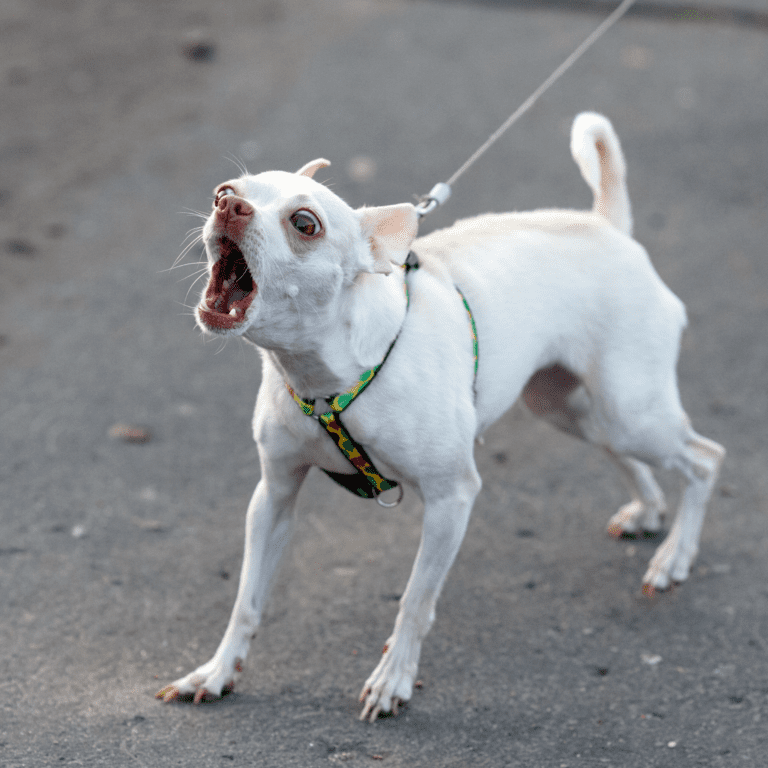
Dog reactivity is a term used to describe dogs who have exaggerated emotional responses to certain triggers.
“Reactive” dogs overreact to something with behavior that is overexcited, angry, frustrated, or anxious. Often characterized by excessive barking, pulling, jumping, or lunging, dog reactivity is a disproportionate emotional response and usually a symptom of an underlying issue such as fear, poor impulse control, or lack of clear guidance.
Many owners dislike the word “reactive.” We use it simply to describe canine behavior that is bigger than what the moment calls for.
We do not want robotic dogs. Reactions are a normal part of being a mammal. But just like humans, dogs have socially appropriate responses. We want dogs that respond proportionately to specific stimuli.
Think of a person who shouts too loudly during a normal conversation. The emotion may be real, but the intensity does not match the moment. That mismatch is what we mean by reactivity.
A common example is a dog who barks or lunges at another dog on a walk. Whether the reaction is driven by excitement, fear, or frustration, it is not an appropriate greeting. Observations of animal behavior, including the work of Temple Grandin, show that socially regulated interactions are typically measured and subtle.
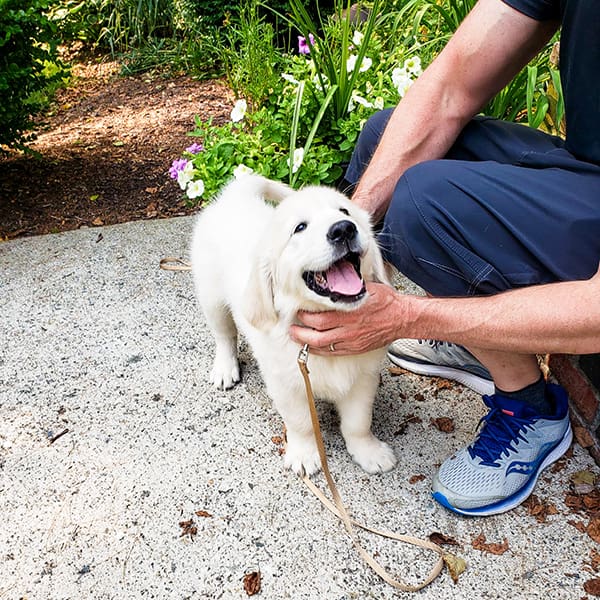
Dogs raised in human homes often need help learning how to regulate their emotions and respond appropriately to other dogs, people, and environmental triggers. This is often labeled as “socialization,” but it is more accurately about emotional regulation.
When a response is blown out of proportion, we call that dog reactive. A reactive dog is not a bad dog. Reactivity is simply an over-emotional response that can be retaught and relearned.
Why Reactivity Develops
Reactivity does not appear out of nowhere. It usually develops because:
- The dog has never learned what a proper socially acceptable greeting looks like
- The dog has rehearsed the behavior repeatedly
- The dog lacks impulse control skills
- The environment is overstimulating, too much for the dog to handle
- The dog has learned that explosive behavior creates distance, gains attention, or gets access
In many cases, no one ever taught the dog what to do instead. Sure, you can wave a treat at the dog and attempt distraction and diversion – sometimes that works. But that doesn’t teach true emotional regulation and transferable skills.
What Helps a Reactive Dog
No matter where you live or what type of dog you have, training a reactive dog follows the same principles:
- Clarity
Dogs calm down when expectations are consistent and understandable. - Accountability
If a dog has practiced explosive responses for months or years, interruption is often necessary. Timing is everything and fairness matters. - Skill Building
Teach your dog specific commands: Let’s Go (With Me), Sit, Down, Place, Come. Redirection using the leash and a command are key to teaching transferable skills and not just distracting. - Moderate Your Emotions
- Stay calm, keep moving, say the command once, and practice moderating your voice.
- Gradual Exposure
Dogs improve when they practice appropriate responses around real triggers in controlled settings. Giving a huge distraction too soon is a sure way to overwhelm anyone’s nervous system. Gradual exposure to triggers is key.
The goal is not suppression or avoidance. The goal is to build new, good habits with appropriately sized emotional responses from your dog given the situation. We want a dog who can notice a trigger and respond in a measured way.
Your dog will bark at guests, UPS, or other dogs. Again, the goal is not to create a robot dog. The goal is to bark and settle within a short, reasonable amount of time when you give the command. “Enough” or “No” are common ones.
For Dog Owners in Massachusetts
If you are in Massachusetts and your dog struggles with barking, lunging, or emotional outbursts, professional dog training can help significantly. Our Foundation and behavior modification programs focus on building emotional regulation, not just managing symptoms.