Teaching Your Dog the Place Command
Picture this: your doorbell rings, you say to your dog, “Place.” The command stops her in her tracks, and she trots over to a small rug, her place. You open the door, accept the pizza delivery, and she remains on her place. You close the door and head to the dinner table to enjoy your food in peace. Your dog still remains on her place. When you’re done with your meal, you release her by saying “Break!” or “Sadie, come!” and only then does she move.
This is the place command in action at its most advanced. Before getting to this point, you have to start small. This is a long-term training exercise that takes weeks, maybe even months, to get! Here’s how you begin:
How to Teach Your Dog To Go to His Place
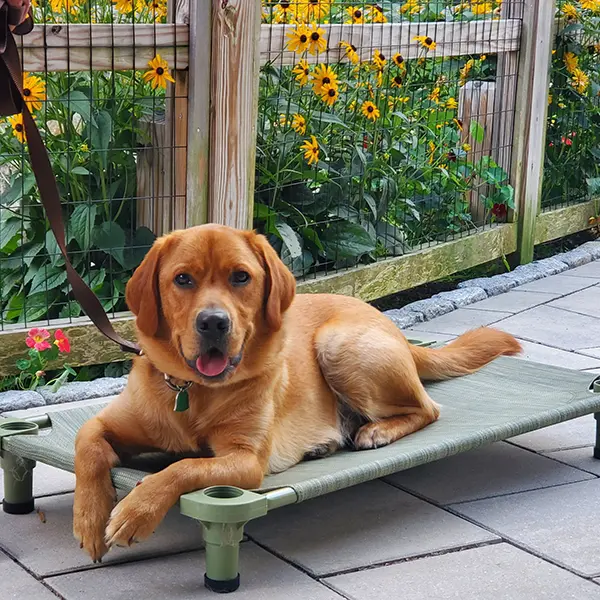
1. Select a Place: Start with a small rug, a folded towel, a bathmat, or place cot. A dog bed is not recommended as “Place” is a command, and lying on the dog bed is for resting or sleeping. This matters less later in training.
2. Introduce the Place: Put a leash and collar on your dog, walk calmly around the room. Stop with your dog’s four paws on the place mat. Take a deep breath. Don’t say anything, don’t pet your dog, or praise her yet. Say “Let’s go” and walk around the room. Repeat the exercise, guiding your dog onto the place mat with the leash. You may need to give more direction with leash pressure than you think! Be firm but patient.
3. Add the Word “Place”: After you’ve established that your dog will walk onto the mat and follow your lead, say “Place” two steps before you get to the place mat. Walk with her, still guiding your dog onto the mat. Again, take a deep breath. Then say “Let’s go” and walk around the room. Keep your energy calm, your dog learns from your lead.
After Mastering Steps 1-3:
4. Change the Angles and Spots: Approach the mat from different sides, then move it to a new location and repeat the introduction. Your dog may not get it with the new picture, go slow and use your leash to guide your dog.
5. Increase the Duration: Increase the number of seconds (breaths) that you stand next to your dog before walking her off the place mat. Maybe she will sit or lie down – that’s great! Don’t make eye contact, don’t pet her, don’t talk to her. Any type of communication will break their focus on the command and they will break, get excited, or walk off. You may be tempted to say “Sit” or “Down” but let her figure it out on her own. Encourage the chill through your demeanor.
6. Increase the Distance: When your dog gets it, lies down, and relaxes, then you slowly drop the leash and take a step backwards. Stay in the same room. Check your phone. Still no praise or comments. If your dog gets up, guide her back to the mat with the leash.
7. Practice and Repetition: Practice the place command with your dog twice a day for about 15 minutes. If you see more resistance or a meltdown comes on, it’s time to call the lesson quits. That’s a great time for a crate nap.
Musical Placemats
Teaching your dog that “Place” can be multiple mats takes time. After you’ve mastered the one place mat together, instead of walking around the room and coming back to the same place mat, walk to a mat in the kitchen, then to one in the living room, dining room, or mud room. Each time repeat the process of saying “Place” two steps before and guiding her onto the mat. Use your leash to guide her onto the mat. Remember, she’s still learning what “Place” means.
“How do I get my dog to remain on Place?”
This is the phase we love to rush! Practice place while you are cooking dinner, watching TV, reading, or doing something that can be interrupted – because you will need to return your dog to the place mat each and every time she gets up.
To teach your dog “Place,” you led her off the mat and brought her back again. Now, so she learns to remain, you return her to the mat every time she gets up.
When she decides to get up, you are close enough to return her to the mat. No need to talk, simply say “Place” as you return her.
Practice having her remain and putting her back for 15 minutes. When the exercise is up, walk over, pick up the leash. When you say “Let’s go” and walk her off the mat, “Place” is officially over.
It can feel like whack-a-mole! You step away, she gets off the mat. You return her she steps off. This is where your patience and firm persistence are key.
If you feel like she gets up every time you try to leave the room, don’t leave the room, she’s not ready yet. Sit nearby and do a project, scroll on your phone.
“Can I teach my dog place without crate training?”
Place can be a good beginning exercise for dogs who have an aversion to crate training. Keep advancing the full crate training process slowly, but teach place at the same time. If your dog cannot remain in the crate while you go to the other room, first read this article.
Yes, you can start teaching place without full crate training; however, full crate training is highly encouraged for all behavioral issues. Start slowly with crate training and consider working with a professional in person.
Place is:
- full crate training without the walls.
- about a calm state of mind, not just remaining in one spot.
- not a replacement for Down or Sit or Stay.
- not your dog relaxing on a dog bed.
- Down and Stay built into one command.
- one of the basic training commands that can take the longest.
“How long does teaching place take?”
It depends, but the place command is a long-term goal that takes daily commitment. Each dog will have a different pace and capacity, as will each owner, but consistent practice of the steps outlined above will teach your dog to remain on his place.
It is a process and will take weeks, probably months, to achieve. Be patient and reach out if you have any questions!