Start Basic Dog Training Before Calling a Trainer
You want a better-behaved dog, but where do you begin? Simple steps can help you start to change your relationship with your dog. While the following tips may not change or eliminate behaviors completely, starting on the basics will help if and when you decide to work with a professional dog trainer. Dog Coach teaches a balanced dog training approach, meaning equal parts yes and no, praise and correction.
If you are experiencing excessive growling, resource guarding, or aggression of any kind, seek professional help. These behaviors do not subside with time and only get harder to manage.
Jump to:
- Jumping & barking
- Velcro dog, pacing
- Won’t settle
- Pulling on the leash
- Coming when called
- Growling & guarding food or toys
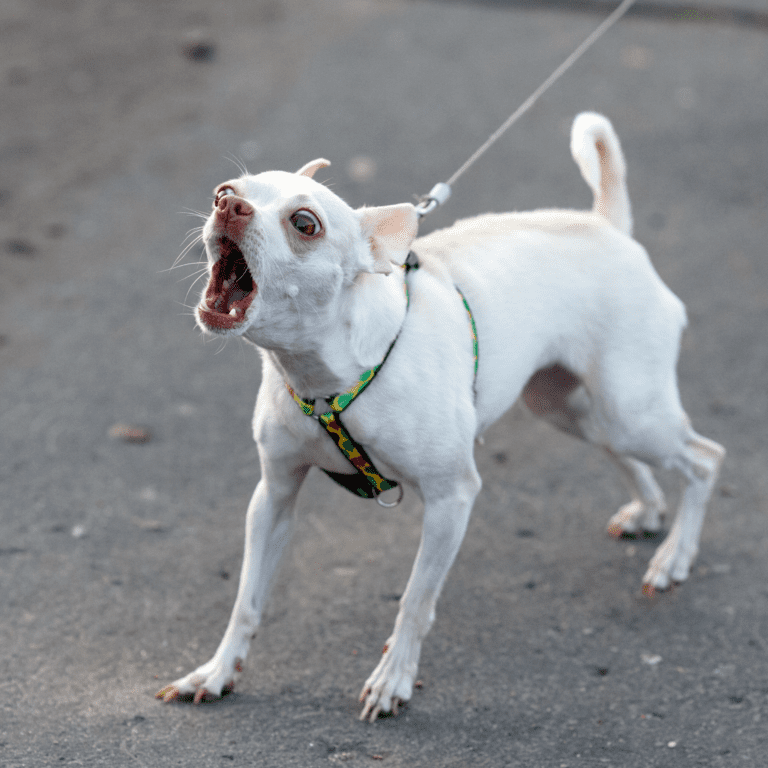
If your dog is crazy in the house, jumping on people, or won’t stop barking:
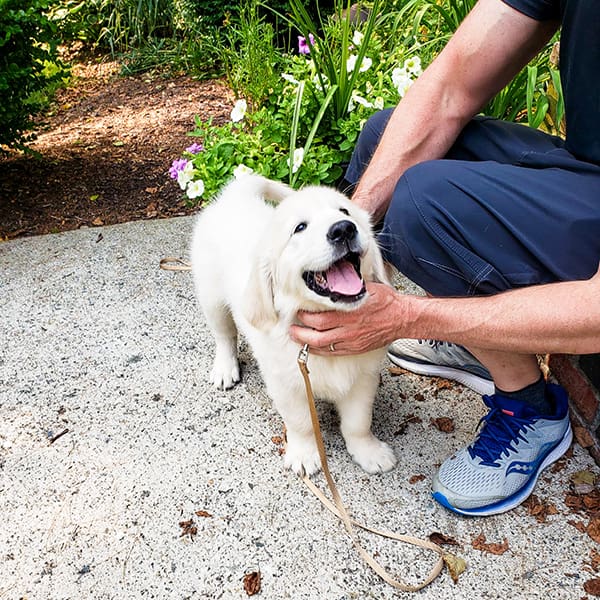
A leash and dog crate are essential training tools. They allow you better control if your dog is going crazy and blows you off. If your dog rushes to the door to jump on a person, anticipate someone entering your house and leash your dog first. This might mean keeping a drag leash on your dog or it might mean snapping the leash on before answering the door. If your dog is a jumper, standing back with a short leash physically restrains the dog from jumping. While not a long-term training solution, it immediately stops the jumping.
If you are currently working on full crate training, putting your dog in the crate with the door latched (instead of holding the leash) is an even better alternative. It’s safer and allows you to attend to the visitor, spouse, or kid, etc. Anticipate the person’s arrival and put your dog in the crate in advance. If you’re caught off-guard, take a minute to do this before opening the front door.
If your dog paces, follows you or your spouse everywhere, and is anxious home alone:
Whether it’s full-blown separation anxiety or just a little too attached, teaching your dog Place is useful. When you say Place, your dog trots over and, with training, remains there until you release her. This takes time and weeks of repetition, but it is one of the most helpful commands. Think of it as crate training without the walls; the ultimate form of impulse control.
While teaching your dog Place, you’ll need some other techniques. Before getting up from the couch (when your dog will inevitably follow you) say, “Bandit, let’s go,” and ask your dog to follow you. If they’re followers, you won’t even need to ask, however the key component is that you told your dog what to do. It’s a job and it’s on your terms, not him deciding when and if to follow you.
And if you’re dealing with a puppy or more intense behavior, add a leash. Tethering means your dog is with you on a leash at all times when not crated. Before getting up to go to the kitchen, say “Bandit, let’s go” and lead him into the kitchen with you. If you need both hands at any point, stand on the leash and get him to settle at your feet while you work.
If your dog won’t settle in the house and has no chill:
It doesn’t matter if your dog is “just looking out the window” or going crazy, not being chill in the house is a yellow flag. While it may not look like problem behavior, your dog is not being calm. If you want better behavior out on walks, with guests, or really any time, that starts at home when it’s just you and your dog.
The solutions are similar to jumping and barking: Full Crate Training to teach calm and as a safe space to contain your dog. Leash on in the house and tether your dog to you.
Teaching the command “Place” is equally important. Before expecting our dogs to settle down on their own, sometimes we need to teach them to settle on Place. From there, they learn to settle anywhere at any time. Read about Place.
If your dog pulls on the leash, no matter what:
Getting your dog to walk nicely next to you means your dog is paying close attention to you and where you’re going. A dog that walks nicely next to you is following your lead, not forging ahead. Stop getting into a pulling match with your dog and get your dog to follow you. In your driveway, with your dog leashed, hold the end of the leash and back up. If your dog doesn’t follow, use kissy noises. We teach the command, “Let’s Go,” meaning, ‘move with me.’ Move back and forth with your dog following you back and forth 10 feet one way and 10 feet the other way. Treats are not indicated here, you’re building a relationship with your dog and having him follow your lead.
When you set off to go walking normally after this exercise your dog may fall back into his old habits of pulling ahead. As soon as you feel him start to step out in front of your leg (his head isn’t parallel with your knee anymore) quickly plant your foot and turn 180 degrees away from your dog. The element of surprise and a swift turn is putting you in the drivers seat and teaching your dog to pay closer attention. We teach this exercise with the humane use of a Herm Sprenger prong collar. It makes this exercise more effective but can be done with some dogs and varying degrees of success without the use of a prong collar. A slip lead or Heather’s Hero lead also work well. The timing of this exercise makes it simple yet sometimes challenging to deliver but done correctly and consistently, will change the way your dog walks.
If your dog sometimes doesn’t come when called:
If your dog doesn’t come when called 100% of the time, she hasn’t earned off-leash privileges. Even if she comes *sometimes* that’s not good enough. All it takes is an urgent situation at the park or your dog blowing you off to realize that it’s a safety hazard–for you and for other dogs.
Recall, coming when called, is taught using a leash. Starting with a 6-foot leash is great. With the leash in your hand, say “Max, come!” and reel your dog in to you. Give lots of praise. Keep repeating this: in the house, out on walks, randomly when he’s sniffing. Graduate to a longer leash, not a flexi leash but a long 20-foot leash. Do the same exercise. When you have 100% recall on the leash, drop the leash and do the same exercise. Keep proofing with a variety of distractions and in new places.
In addition to teaching “Come” adding in more structure (Full Crate Training) and boundaries (Place) reinforces the command. It may seem unrelated, but assigning your dog jobs and asking more of her in the house reinforces that she must comply when you say the command. Teach Place, use a crate, and have higher standards for your walks.
If your dog growls when you try to take a toy or food from him:
If a dog has a toy, treat, food, or any object and growls or shows teeth when you move toward her, that is resource guarding. If this happens, the safest way to get the object is to redirect the dog. Get her to go outside, come for a treat, or jangle the leash to go on a walk. Often though, whatever they have is so high value they won’t give it up. Ideally, you won’t get to a scenario like that. If you’re unsure of how your dog will respond to a bone or toy, keep a leash on her. She can drag it around the house and then when you need to separate her from the object, you have slightly more control. Also consider feeding the bone or treat in the crate for safety if you have young kids who are liable to toddle into the dog’s path and create problems.
Teach your dog “Out.” Similar to “drop it” but more effective, it doesn’t just mean ‘spit it out’ it means ‘drop the object and get away from it.’ It is most effectively taught using a longline or even two. Set up a bowl of treats, let your leashed dog get close, before she eats or sniffs, say “Out” and immediately pull her away from the treats. Repeat with a wide range of toys, human food, people, and objects. Ideally taught by using two longlines and two people, you can say out and your dog moves away from you while the second person reels the dog away from you.
Additional Training Principles to Consider:
Separation Anxiety: A Balanced Approach to Curing it Through Training
Your Leadership: The Essential Piece of Dog Training
Tone of Voice as a Dog Training Tool