Short Dog Walks as a Balanced Training Tool
Why Short Walks Can Be More Effective for Your Dog
When most people think of a tired dog, they think of long walks, running free, or playing fetch.
Each of those has its place.
But for many dogs, especially those struggling with behavior, shorter walks can be far more effective.
Not because they burn more energy.
Because they give your dog something to do.
What Makes a Short Walk Different
A shorter walk creates space for higher expectations.
Instead of just moving through the environment, your dog is now:
- paying attention
- following your lead
- moving with intention
In other words, your dog has a job.
And that changes everything.
Why a Job Matters
Dogs are not just looking for exercise.
They are looking for direction.
When your dog has a clear job, they don’t need to:
- scan everything around them
- react to every distraction
- make their own decisions
That’s where a lot of unwanted behavior comes from.
A job replaces that uncertainty with clarity.
Brain Work Creates a Calmer Dog
When your dog is focused, thinking, and following through on something simple like walking with you, they are using their brain.
And that kind of effort creates a different kind of fatigue.
Not just physical tiredness, but mental satisfaction.
That’s what helps a dog:
- settle more easily
- stay calmer in the house
- feel less reactive in the world
This is why a short walk can leave your dog more relaxed than a long one.
At a certain point, more exercise can actually start to work against you.
If your dog is still restless, reactive, or unable to settle despite long walks or lots of activity, it may not be a lack of exercise at all.
→ Read: Is your dog getting too much exercise?
What This Looks Like in Real Life
Instead of a long walk where your dog is:
- pulling ahead
- stopping and starting
- reacting to everything around them
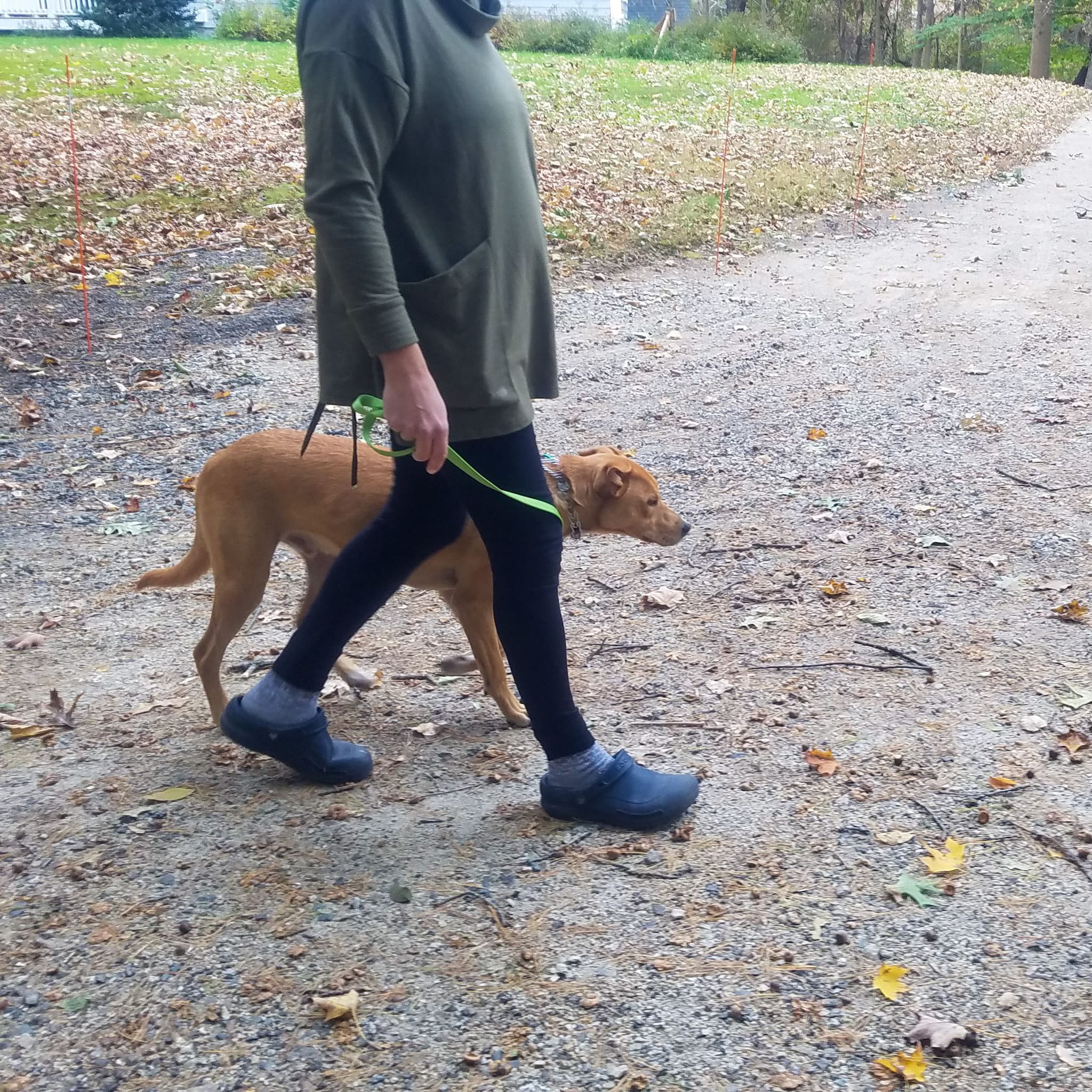
A short walk becomes more intentional.
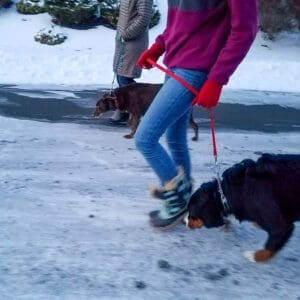
Your dog is simply moving with you.
Not in charge. Not scanning. Not deciding.
Just with you.
Building From Here
Longer walks can come later.
But starting with shorter walks allows you to build something more important first: clarity.
Because once your dog understands their role, everything else becomes easier.
A Simple Way to Think About It
A long walk gives your dog movement.
A short walk gives your dog:
- a job
- something to focus on
- a way to use their brain
And that’s what creates a calmer, more stable dog.
This is where exercise, enrichment, and training start to overlap.
A walk isn’t just about burning energy. It’s an opportunity to give your dog something to focus on, something to follow, and a way to move through the world calmly.
That’s the difference between a dog that is simply tired and a dog that is actually settled.
This is the foundation of what we call a Structured Walk.