Your Leadership: The Essential Piece of Dog Training
What does your dog choose to do when you’re not giving a specific command? Bark at the window? Follow everyone around the house? Stay over-excited all day? Does he ignore you when you need him to pay attention? So what’s missing?
When your dog respects your leadership, he learns to make good choices. That’s fundamental to good dog training.
By laying out the “rules” or boundaries, your dog learns your expectations. Dogs are living, breathing beings that make decisions; they’re not robots. Dogs rely on us to teach them to navigate this modern, developed world safely and successfully. That’s what makes your leadership so essential.
All this starts by learning to communicate effectively with your canine. Training must start by using a leash to teach specific commands and hold higher expectations. Through consistent practice of basic lessons, you refine your leadership and develop a method of communication that connects with your new expectations. Your dog learns what “Heel,” “Place,” and “Come” mean.
Each basic lesson has a cumulative end goal:
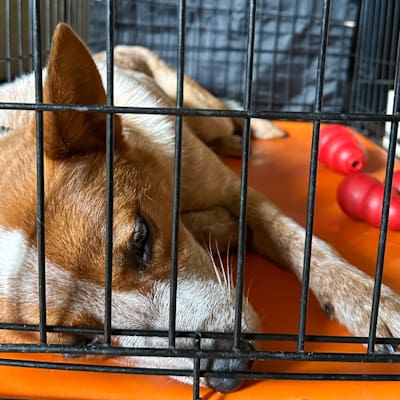
- Crate teaches your dog to settle.
- Place teaches your dog to settle without a crate. After mastering Place, your dog learns to settle anywhere, regardless of the location.
- Structured Walks (Heel) teach your dog to focus on you and ignore distractions.
- “Break” or “Ok” signals to your dog that they can go find their own fun, they’re off duty.
- Off-leash recall teaches your dog to focus on you, even in the face of high-level distractions.
When you manage and lead your dog to better behavior, you are actually reducing the micromanaging you’ll need to do in the future, when your dog starts to show you “more game.” Clients are regularly concerned that strong leadership is a lot of work and that they’ll need to “do this forever.” Yes, your dog will need a leader for his whole life. But the goal isn’t to be a micromanager boss, it’s to build a trusting, loving, reciprocal relationship between you and your dog.
From there, it’s up to you to commit to stepping into the role of a leader. Through correcting your dog for poor choices and rewarding her for good choices, you’re outlining the boundaries of your relationship together: ‘Do this, not this’. Dogs learn amazingly fast.
Look for opportunities to lead and get your dog headed in the right direction. Teaching your dog the basic lessons outlined above are some of the easiest first steps you can take. Our programs build confidence in your leadership skills and help you train a well-behaved family dog.