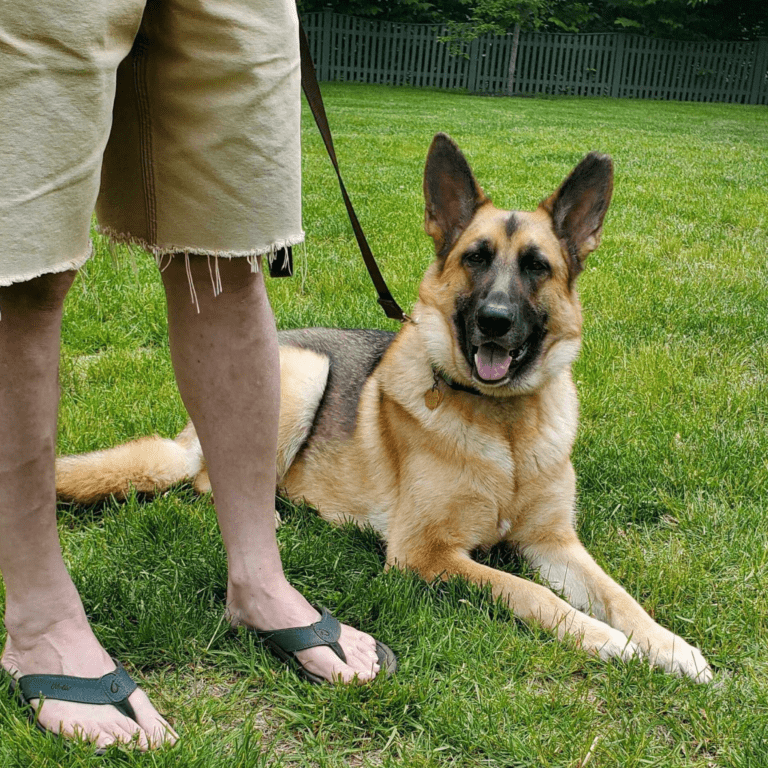
Conflict with your dog often starts with expectations.

When we talk about expectations, we mean behaviors you believe your dog should reliably perform in a specific situation. Not a hope. Not a wish. A skill you believe your dog already knows and can do consistently.

If that belief does not match reality, frustration follows.

Too high, and you get angry.
Too low, and bad habits grow.
Inconsistent, and your dog gets confused.

Let’s get clear.

Two dogs standing on a stone wall

Expectations That Are Too High

Common examples:

  • Getting frustrated when your 8 week old puppy does not come when called
  • Expecting a young puppy to signal clearly that they need to go outside
  • Comparing your puppy to your last dog
  • Expecting behavior you see on social media

Young puppies are babies. They have limited bladder control, short attention spans, and very little training history. Skills like recall take repetition and practice. High expectations without training create tension.

Two dogs standing on a stone wall

Realistic Expectations for an 8 to 12 Week Old Puppy

With basic structure and consistency, it is realistic for your puppy to:

  • Sleep most of the night
  • Begin learning to pee and poop outside
  • Settle quietly in a crate for short periods
  • Start responding to their name

That is early foundation work. It sets the stage for formal obedience training around four months of age. Anything beyond that is first grade material.

This puppy phase is often rushed, with owners prioritizing commands before the dog is developmentally ready. Focus instead on routine, structure, and raising a calm, stable puppy.

Around 16 weeks, give or take depending on the individual dog, their brain is better prepared for more structured learning. Think of it like starting first grade.

Two dogs standing on a stone wall

Expectations That Are Too Low

What you tolerate today becomes the pattern you live with tomorrow.

Low expectations are just as problematic. They allow unwanted behaviors to become habits.

If your dog is four months or older and you are excusing these behaviors, your expectations may be too low:

  • Not coming when called
  • Chewing household items
  • Peeing or pooping in the house
  • Pulling hard on leash
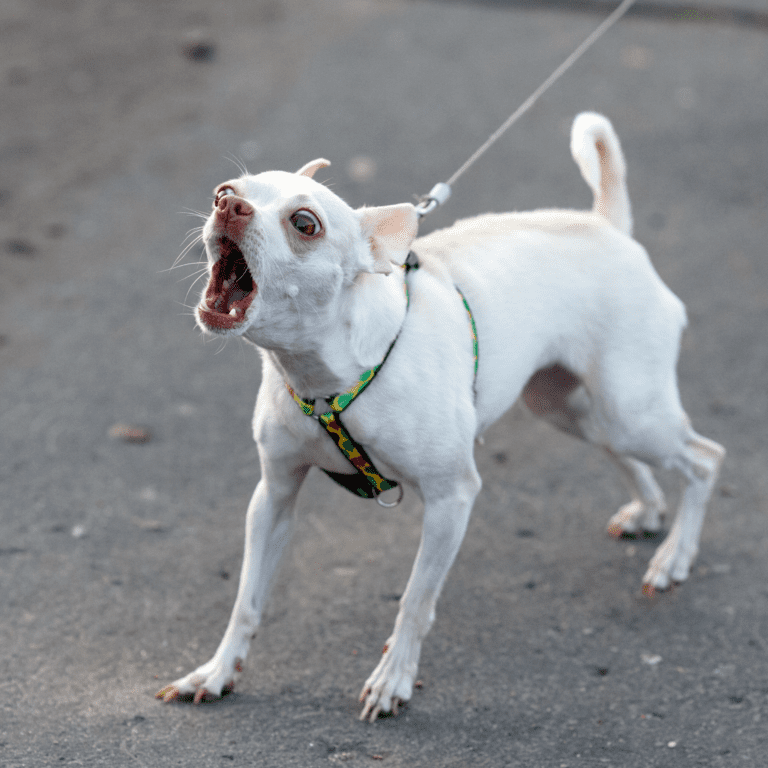
  • Barking excessively at people, dogs, sounds, or deliveries
Two dogs standing on a stone wall

Excessive barking and overreaction often develop into full reactivity. Waiting rarely solves it.

Behavior improves with structure and training, not time alone. Skills like “come” require repetition and reinforcement.

Set your expectations based on what your dog has been taught and practiced, not on hope or age alone.

welsh pembroke corgi walks on leash during winter with owner in neighborhood during training

Realistic Expectations for a 4+ Month Old Dog

By four months of age, your dog is developmentally ready for more structured learning.

With consistent training and repetition, it is reasonable to expect your dog to:

  • Lie calmly on a dog bed
  • Settle after an initial alert bark
  • Walk on a loose leash
  • Greet guests without jumping
  • Come when called in low distraction environments (e.g. inside your house or an empty backyard)

These are not advanced behaviors. They are foundational skills for living in a human household.

If these skills are missing, the solution is training and structure, not lowering the standard.

black lab lying down on leash

Dogs Don’t Come Pretrained

We expect a lot from our dogs. Calmness. Control. Manners. Reliability. But they enter our homes without understanding any of it.

They are not born knowing how to live by human rules or function in human environments.

They do not automatically understand:

  • Loose leash walking
  • Greeting guests politely
  • Ignoring distractions
  • Settling in stimulating environments

Those are learned skills.

Dogs rely on us to teach them how to succeed in our world through structure, boundaries, repetition, and clear feedback.

That is dog training.

two clients and dogs walk together up the street during winter.

Ask Yourself

  • Am I expecting skills I have not deliberately taught and practiced?
  • Am I tolerating behaviors that are becoming habits?
  • Are my expectations aligned with my dog’s developmental stage?

When expectations match training and development, progress becomes predictable. When they do not, frustration follows.

cream golden retriever looks up at owner while training out in back yard owners

Clear expectations and consistent training do not just improve behavior. They make life with your dog easier, calmer, more enjoyable.

When you are not constantly correcting, managing, or feeling disappointed, you can actually enjoy your dog. You can go places confidently. You can relax in your own home. You can have more fun together.
two clients and dogs walk together up the street during winter.

Teaching Your Dog the Place Command

Picture this: your doorbell rings, you say to your dog, “Place.” The command stops her in her tracks, and she trots over to a small rug, her place. You open the door, accept the pizza delivery, and she remains on her place. You close the door and head to the dinner...

Start Basic Dog Training Before Calling a Trainer

You want a better-behaved dog, but where do you begin? Simple steps can help you start to change your relationship with your dog. While the following tips may not change or eliminate behaviors completely, starting on the basics will help if and when you decide to work...

How to Plan for Safety and Confidence with Your Dog

Planning for challenging, unsafe, or uncomfortable situations can help you better navigate life with your dog. Just like fire drills help us prepare for emergencies, understanding unsafe or stressful incidents with your dog is also helpful. You’ve thought through how...

Are You Accidentally Making Dog Training Harder? 6 Things to Avoid

Dog training can feel frustrating when progress is slow, but sometimes small things get in the way without us realizing it. A well-behaved dog starts with a calm state of mind. If your dog is too excited, nervous, or stuck in a “fight or flight” mode, they’re paying...

Your Leadership: The Essential Piece of Dog Training

What does your dog choose to do when you’re not giving a specific command? Bark at the window? Follow everyone around the house? Stay over-excited all day? Does he ignore you when you need him to pay attention? So what’s missing? When your dog respects your...

Training Your Dog for the Vet

Your dog doesn’t have to love the vet, but she does need to be on good behavior. Vets work long hours to care for our beloved canines; we can help make their job a bit easier by training our dogs for the vet. Getting your dog ready for the vet also means training her...

Training Your Dog for the Groomer

Every dog will need grooming regardless of the breed and training is important to making that possible. Your goal is to start small, getting your puppy used to the motions and sensations of brushing, nail clipping, and even bathing. Through regular handling, slow...

Crate Training: Raising a Calm Puppy to be a Confident Dog

Raising a well-behaved dog starts by establishing a calm state of mind during puppyhood. Beginning with crate training your new pup will set your family up for long-term success. When you crate train your puppy, you teach them how to self-settle. This assigns your...

Anticipate Excitement Level and Have a Well-Trained Dog

Learning to anticipate your dog's reactivity is key to stopping unwanted behaviors. It’s a process and takes time to learn to read your dog’s body language well. The better we get at reading their body language, the more efficiently and accurately we can set ...

Advocating for Your Dog is an Essential Role in Training

Having a well-behaved dog starts with your leadership. We talk a lot about leading your dog to make better choices, consistent boundaries, and assigning your dog a job. A key component to being a successful leader is advocacy. No matter who you’re leading, a team at...

Now Offering Training in Somerville, Cambridge, Medford & Surrounding Area!

See the full list of areas served

Our In-Person Programs

Team Puppy Training

Encourages your leadership and show how you to nurture good behavior. 

Foundation Training

Covers the basics of good dog behavior as well as some behavior modification.

Remote Collar Training

Foundation Training with e-collar for total off-leash freedom and behavior modification.

What our clients have to say...

Dog Coach listened carefully and observed keenly my interaction and tone of voice with Bella. At nearly 6 months now, she is the best-trained dog I've had. It was a worthwhile experience!

Margaret B.

We want to thank Dog Coach for your patience and encouragement! Our dogs are really coming into their own as the perfect family dogs we were looking for!

David S.

Such a great investment! We got a puppy and had a toddler... It was overwhelming at first. Working with Dog Coach has been the gift that keeps on giving.

Sylvie K.