Anticipate Excitement Level and Have a Well-Trained Dog
Learning to anticipate your dog’s reactivity is key to stopping unwanted behaviors. It’s a process and takes time to learn to read your dog’s body language well. The better we get at reading their body language, the more efficiently and accurately we can set boundaries and tell them “No.” It’s all about learning to communicate your higher expectations for your dog’s behavior.
The Sooner The Better
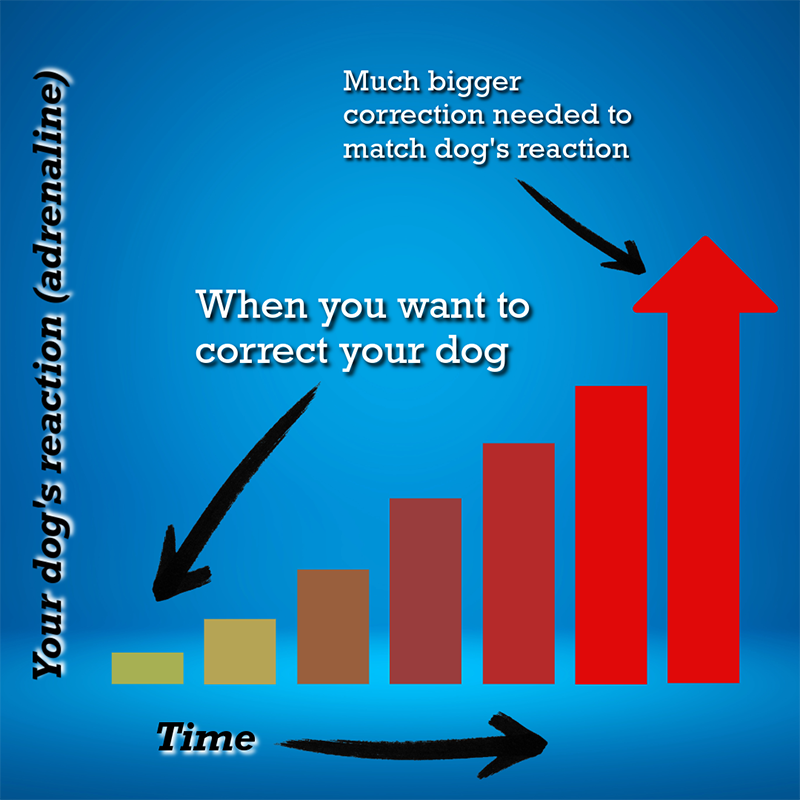
Dogs overreact to many things. Sometimes we know in advance that our dog will react because we can see them ramp up or know what they normally do in that situation. Either way, the earlier you correct your dog, the better. The graph below illustrates this point. The longer you allow your dog to bark, fixate, or react, the bigger your correction needs to be to match your dog’s level of adrenaline. Side eye and just looking at another dog (considering reacting) often only needs a “No” and a small leash pop. When your dog is fully reacting, jumping, barking, or lunging, a much larger correction is needed to overcome their intensity and refocus them back on you.
Reaction Loading…
You may not even realize it, but your dog’s reaction doesn’t start when he barks or bites. The subtle signs before a reaction are often called “loading” and are the behavioral cues to learn and anticipate. Good dog owners maintain control through careful observation, practice, and training.
Being observant and knowing your dog well is key to anticipating their excitement level. Begin by getting comfortable with the leash in your hand. Start noticing how your dog sees distractions. Dog Coach training programs teach you not just to read your dog, see the loading, and correct the moment you see the behavior, but also to be confident and ready for the reaction.
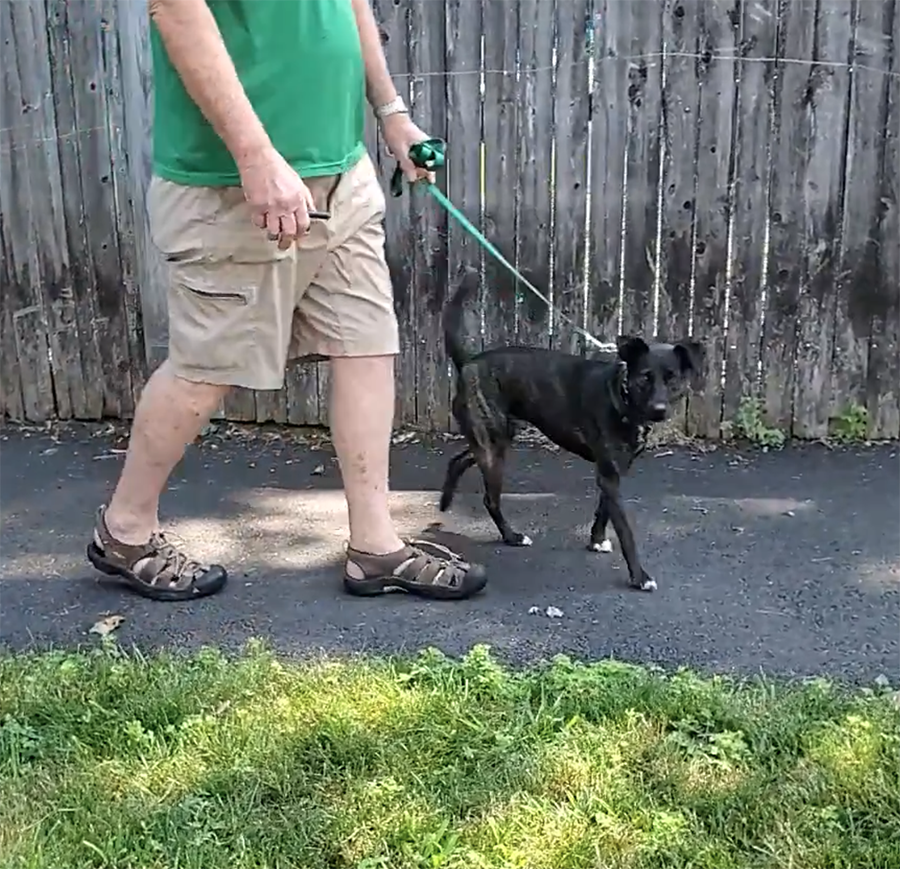
Examples of Anticipating Your Dog’s Reaction
- Correct your dog the moment when he starts to fixate on a person/ animal, before barking & reacting.
- If you use a remote collar, dial up before walking past another dog on the sidewalk. You are now ready if your dog cannot handle the distraction.
- Call your dog back the moment you see another dog on the trail.
- Correct your dog when her fur goes up on her back and you expect her reactive behavior.

Anticipation isn’t Lack of Trust
Anticipating your dog’s reactions isn’t staring at him, wondering what he’s going to do next and bracing for it. It starts small with training to build a strong relationship with your dog so you can trust your dog – and your dog can trust you. If you don’t yet trust your dog, that’s okay, but work towards mutual trust.
Daily Life & Anticipating
Anticipating your dog’s behavior doesn’t go away when you finish training. It becomes second nature for us to notice, anticipate, and respond to our dogs’ behaviors. Many reactive or aggressive dog owners are used to anticipating and avoiding conflict with their dogs–rightly so. But having a way to communicate to your dog, ‘No, knock it off,’ is the imperative second half of the equation. It’s good to notice things, but it’s great when we do something about it. That’s where change happens. That’s dog training.