Uncontrolled Barking
What is Uncontrolled Barking?
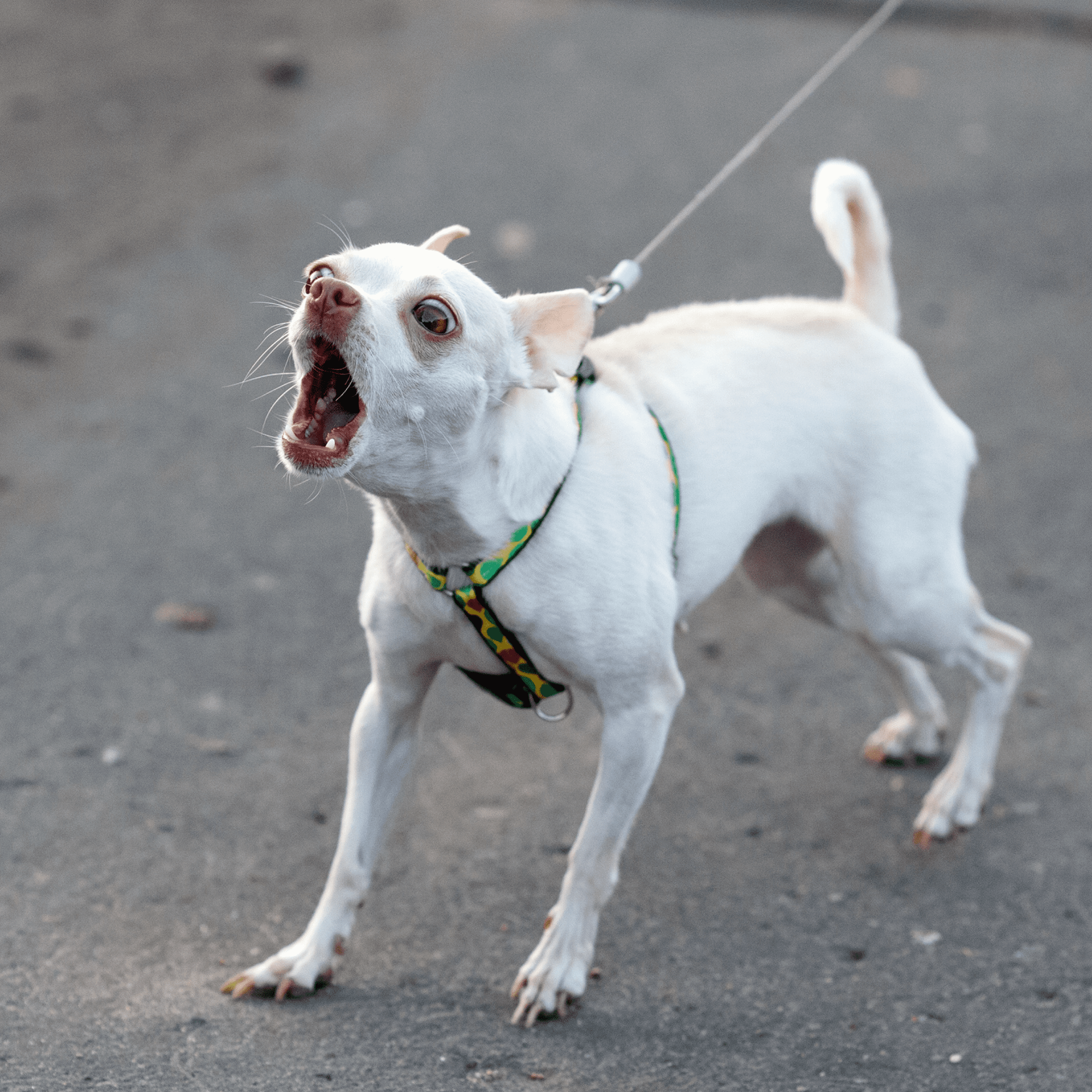
Uncontrolled barking is exactly what it sounds like.
If your dog is barking and unable to stop, that’s uncontrolled.
Left alone, it can quickly become a problem for you and everyone around you.
You may see it at the window, at the front door, or the moment you leave the house.
It can show up in different ways:
- barking at movement outside the window
- barking at the mailman or people passing by
- barking when guests arrive
- barking when left home alone
The trigger may change, but the pattern is the same.
Your dog becomes reactive, and there’s nothing in place to interrupt or guide them out of it.
How to Recognize It
Most owners focus on what their dog is barking at.
But the more useful question is:
Can your dog stop when you ask?
If you’ve ever found yourself repeating “quiet,” raising your voice, or trying to distract your dog with little success, you’re not alone.
In those moments, it can feel like your dog is ignoring you.
But more often, it’s not defiance.
It’s a breakdown in communication.
Why It Happens
Dogs bark for many different reasons.
Some are reacting to movement or sound.
Some become overwhelmed by stimulation.
Some struggle when left alone.
If your dog barks when you leave, it may be related to separation anxiety.
→ Read: Separation Anxiety in Dogs
If your dog barks at people, dogs, or activity outside, it may be reactivity or overexcitement.
→ Read: Dog Reactivity and Overexcitement
These labels can help describe what you’re seeing.
But in practice, they often lead back to the same underlying issue.
In the moment your dog begins barking, two things are happening:
Your dog doesn’t have a clear alternative behavior, and your attempts to interrupt the barking aren’t landing in a way they can follow
So the behavior continues.
Not because your dog is choosing to ignore you, but because it’s the only response available to them in that moment.
The Bottom Line
Uncontrolled barking is rarely just about the barking itself.
It’s a communication problem.
Your dog is reacting to something in their environment, and there isn’t a clear, reliable way to guide them out of that state.
Over time, the pattern repeats and becomes more ingrained.
What starts as a reaction becomes a habit.
Where to Start
The goal is not to simply tell your dog to stop, it’s to give them a clearer path forward.
Start here:
- Use a leash in the house so you can interrupt and redirect more effectively
- Step in earlier, before the barking escalates
- Reinforce calm behavior so your dog begins to understand what is expected
This is about shifting from talking to guiding.
Most dogs don’t need louder commands.
They need clearer, more consistent communication.
If your dog doesn’t yet have a reliable way to settle, this is where teaching an “off switch” becomes essential.
→ Read: Teaching Your Dog the Place Command
→ Read: When & Why to Keep a Leash On in the House
When It’s a Bigger Issue
Some barking patterns require more targeted work.
Barking when home alone, reacting to people or dogs outside, or becoming overwhelmed during moments like guests arriving can each have their own nuances.
But they still share a common thread.
Your dog needs a better way to handle those situations, and you need a clear, consistent way to guide them through it.
Changing the Pattern
Dogs don’t stop barking simply because we tell them to.
They stop when something else becomes clearer.
When they understand what to do instead, and when that understanding is reinforced consistently over time, the behavior begins to shift.
This is where training becomes more than commands; it becomes communication your dog can rely on, even in more challenging moments.
As that communication improves, the barking starts to fade.