Many dog owners are already walking their dogs every day.
But if your dog is pulling, scanning the environment, reacting to everything, or making their own decisions the entire time, that walk may be adding more stimulation than it’s relieving.
A Structured Walk is different.
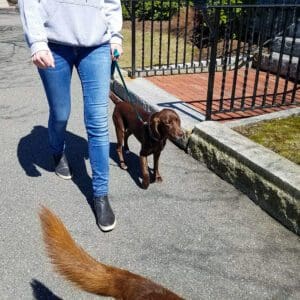
Instead of your dog leading the walk, you are setting the pace, direction, and expectations. Your dog walks calmly at your side, paying attention, rather than moving through the world in a constant state of excitement or anticipation.
It’s not just about where you go.
It’s about how you go together.
Many dogs are getting a lot of movement, but very little guidance.

What It Looks Like
On a Structured Walk:
- your dog is walking at your side, not pulling ahead
- the leash stays loose most of the time
- your dog is aware of you and following your pace
- you are calmly guiding the walk
Every moment on the leash becomes an opportunity to reinforce calm behavior.
Over time, your dog begins to understand what’s expected and can move through the world in a more relaxed, stable way.
Getting Started
A good walk starts before you even leave the house.
If the energy is frantic inside, it will carry outside.
Take a moment to slow things down. Get the leash on while your dog is calm, not excited. The goal is to start the walk in the same state of mind you want to maintain.
Duration
Start small.
Short, focused walks are far more effective than long, chaotic ones.
Think 5–15 minutes in a low-distraction area like your driveway, yard, or quiet street. This gives you space to practice without everything falling apart.
As things improve, you can gradually expand.
When you’re first working on new skills, shorter walks are important. It’s much easier to stay consistent, keep things calm, and communicate clearly without the added pressure of distance or distractions.
But this isn’t just a starting point.
Many dogs are getting a lot of movement, but very little guidance. A shorter, more intentional walk often creates better behavior than a long, unstructured one.
In other words, it’s not just about doing less. It’s about doing it better.
→ See why short walks can make a bigger difference
Frequency
Use your daily outings as opportunities to practice.
Short walks, potty breaks, and quick outings all count.
Consistency matters more than distance. Over time, your dog will begin to fall into your pace and understand what’s expected.
A Final Thought
Most dogs don’t need more walking.
They need better walks.
When you shift from simply moving your dog to guiding your dog, everything starts to change.
If your dog is getting a lot of exercise but still struggling, you’re not alone. Many owners are walking their dogs for miles each day without seeing improvement.
→ Read: Is Your Dog Getting Enough Exercise?