|

When Is the Best Time to Get a Second Dog? Expert Tips for a Smooth Transition

[et_pb_section fb_built=”1″ _builder_version=”4.16″ global_colors_info=”{}”][et_pb_row column_structure=”3_5,2_5″ _builder_version=”4.24.0″ background_size=”initial” background_position=”top_left” background_repeat=”repeat” width=”100%” max_width=”2326px” global_colors_info=”{}”][et_pb_column type=”3_5″ _builder_version=”4.16″ custom_padding=”|||” global_colors_info=”{}” custom_padding__hover=”|||”][et_pb_text _builder_version=”4.27.4″ vertical_offset_tablet=”0″ horizontal_offset_tablet=”0″ z_index_tablet=”0″ text_text_shadow_horizontal_length_tablet=”0px” text_text_shadow_vertical_length_tablet=”0px” text_text_shadow_blur_strength_tablet=”1px” link_text_shadow_horizontal_length_tablet=”0px” link_text_shadow_vertical_length_tablet=”0px” link_text_shadow_blur_strength_tablet=”1px” ul_text_shadow_horizontal_length_tablet=”0px” ul_text_shadow_vertical_length_tablet=”0px” ul_text_shadow_blur_strength_tablet=”1px” ol_text_shadow_horizontal_length_tablet=”0px” ol_text_shadow_vertical_length_tablet=”0px” ol_text_shadow_blur_strength_tablet=”1px” quote_text_shadow_horizontal_length_tablet=”0px” quote_text_shadow_vertical_length_tablet=”0px” quote_text_shadow_blur_strength_tablet=”1px” header_text_shadow_horizontal_length_tablet=”0px” header_text_shadow_vertical_length_tablet=”0px” header_text_shadow_blur_strength_tablet=”1px” header_2_text_shadow_horizontal_length_tablet=”0px” header_2_text_shadow_vertical_length_tablet=”0px” header_2_text_shadow_blur_strength_tablet=”1px” header_3_text_shadow_horizontal_length_tablet=”0px” header_3_text_shadow_vertical_length_tablet=”0px” header_3_text_shadow_blur_strength_tablet=”1px” header_4_text_shadow_horizontal_length_tablet=”0px” header_4_text_shadow_vertical_length_tablet=”0px” header_4_text_shadow_blur_strength_tablet=”1px” header_5_text_shadow_horizontal_length_tablet=”0px” header_5_text_shadow_vertical_length_tablet=”0px” header_5_text_shadow_blur_strength_tablet=”1px” header_6_text_shadow_horizontal_length_tablet=”0px” header_6_text_shadow_vertical_length_tablet=”0px” header_6_text_shadow_blur_strength_tablet=”1px” box_shadow_horizontal_tablet=”0px” box_shadow_vertical_tablet=”0px” box_shadow_blur_tablet=”40px” box_shadow_spread_tablet=”0px” global_colors_info=”{}”]

There are pros and cons of getting a second dog. Thinking through each point is essential before introducing another pup to your household. Here are some tips that will help you make the best decision.

[/et_pb_text][et_pb_text _builder_version=”4.27.4″ vertical_offset_tablet=”0″ horizontal_offset_tablet=”0″ z_index_tablet=”0″ text_text_shadow_horizontal_length_tablet=”0px” text_text_shadow_vertical_length_tablet=”0px” text_text_shadow_blur_strength_tablet=”1px” link_text_shadow_horizontal_length_tablet=”0px” link_text_shadow_vertical_length_tablet=”0px” link_text_shadow_blur_strength_tablet=”1px” ul_text_shadow_horizontal_length_tablet=”0px” ul_text_shadow_vertical_length_tablet=”0px” ul_text_shadow_blur_strength_tablet=”1px” ol_text_shadow_horizontal_length_tablet=”0px” ol_text_shadow_vertical_length_tablet=”0px” ol_text_shadow_blur_strength_tablet=”1px” quote_text_shadow_horizontal_length_tablet=”0px” quote_text_shadow_vertical_length_tablet=”0px” quote_text_shadow_blur_strength_tablet=”1px” header_text_shadow_horizontal_length_tablet=”0px” header_text_shadow_vertical_length_tablet=”0px” header_text_shadow_blur_strength_tablet=”1px” header_2_text_shadow_horizontal_length_tablet=”0px” header_2_text_shadow_vertical_length_tablet=”0px” header_2_text_shadow_blur_strength_tablet=”1px” header_3_text_shadow_horizontal_length_tablet=”0px” header_3_text_shadow_vertical_length_tablet=”0px” header_3_text_shadow_blur_strength_tablet=”1px” header_4_text_shadow_horizontal_length_tablet=”0px” header_4_text_shadow_vertical_length_tablet=”0px” header_4_text_shadow_blur_strength_tablet=”1px” header_5_text_shadow_horizontal_length_tablet=”0px” header_5_text_shadow_vertical_length_tablet=”0px” header_5_text_shadow_blur_strength_tablet=”1px” header_6_text_shadow_horizontal_length_tablet=”0px” header_6_text_shadow_vertical_length_tablet=”0px” header_6_text_shadow_blur_strength_tablet=”1px” box_shadow_horizontal_tablet=”0px” box_shadow_vertical_tablet=”0px” box_shadow_blur_tablet=”40px” box_shadow_spread_tablet=”0px” global_colors_info=”{}”]

When is Right to Get a Second Dog?

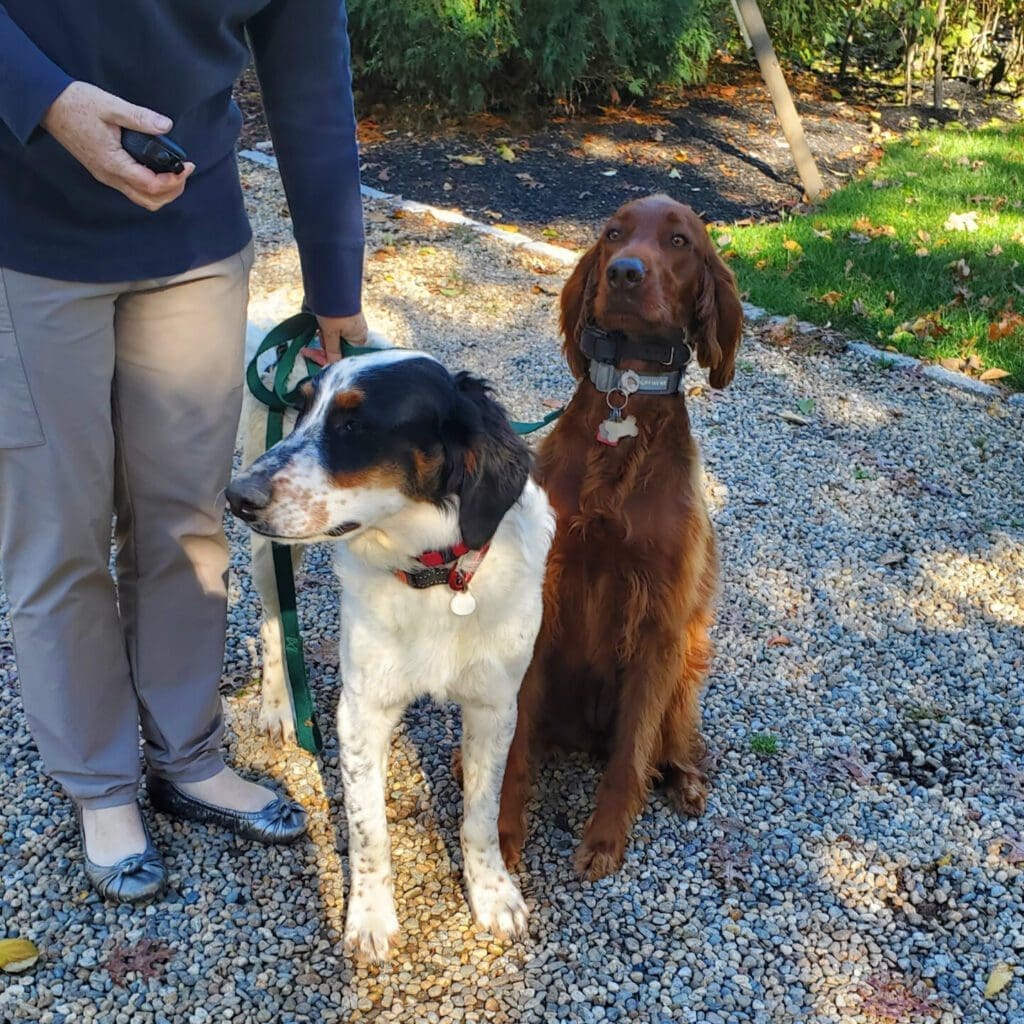
As dog trainers, we’re often asked when the right time to get a second dog is. And there is a right time to get a second dog – and less than ideal times. The short answer is when your current dog is fully trained* and when you have the time and resources. 

An additional dog is more than just 2x the food and vet bills.t brings a whole new dynamic to your household. You’ll have your relationship with your current dog, your relationship with your new dog, and then your dogs’ relationship with each other. That third aspect can be the biggest sticking point for households with two dogs. A dog that was never reactive or has never guarded toys or food can start exhibiting these behaviors with a new dog in the house. They may not, but as owners, it’s up to us to set the scene and stack the deck in favor of good behavior. 

[/et_pb_text][/et_pb_column][et_pb_column type=”2_5″ _builder_version=”4.16″ custom_padding=”|||” global_colors_info=”{}” custom_padding__hover=”|||”][et_pb_image src=”https://coachyourdog.com/wp-content/uploads/2024/12/lg-and-small-mutts-with-owner-during-dog-training.jpg” alt=”anxious dog lies on couch panting and alert” title_text=”lg and small mutts with owner during dog training” _builder_version=”4.27.4″ global_colors_info=”{}”][/et_pb_image][/et_pb_column][/et_pb_row][et_pb_row column_structure=”3_4,1_4″ _builder_version=”4.16″ custom_margin=”0px||||false|false” custom_margin_tablet=”0px||||false|false” custom_margin_phone=”0px||||false|false” custom_margin_last_edited=”on|desktop” global_colors_info=”{}”][et_pb_column type=”3_4″ _builder_version=”4.16″ global_colors_info=”{}”][et_pb_text _builder_version=”4.27.4″ background_color=”gcid-6902f0ed-ded7-4318-a16d-ad088c552d5a” custom_padding=”25px|25px|25px|25px|true|true” global_colors_info=”{%22gcid-6902f0ed-ded7-4318-a16d-ad088c552d5a%22:%91%22background_color%22%93}”]

What Does “Fully Trained” Mean?

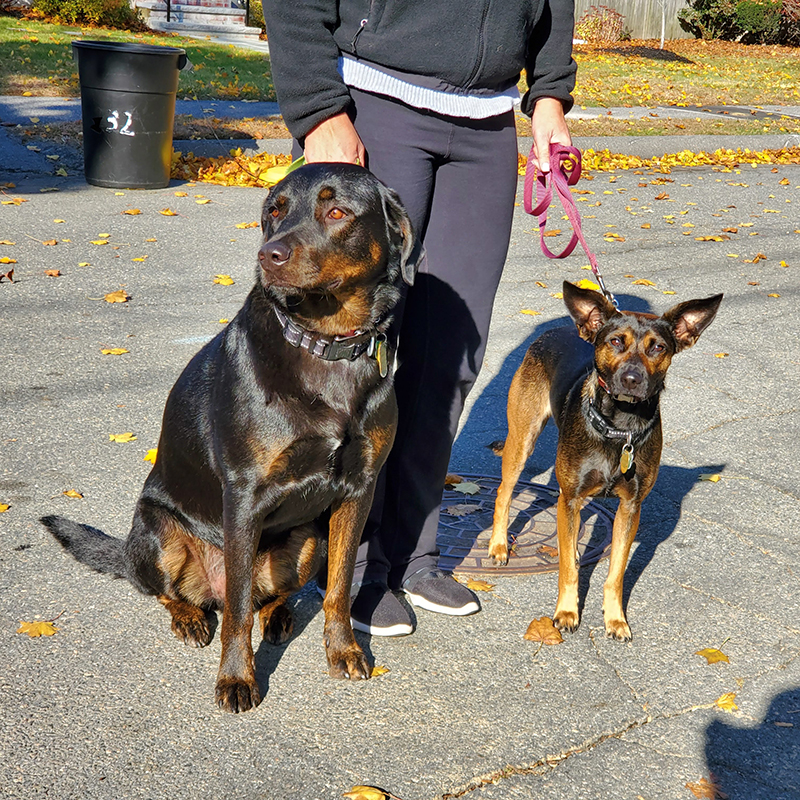
Having a dog that is fully trained means:

  • Understand sit, down, come, & place commands
  • Can chill out & self-settle, whether in a dog crate, on place, or next to you
  • Comply with your commands a minimum of 80-90% of the time (ideally 100%)
  • Have a strong relationship with you, their owner, and all other family members
  • Can be polite around a wide range of people and dogs

[/et_pb_text][/et_pb_column][et_pb_column type=”1_4″ _builder_version=”4.16″ global_colors_info=”{}”][et_pb_image src=”https://coachyourdog.com/wp-content/uploads/2024/12/rottie-and-terrier-during-dog-training-outside.jpg” title_text=”rottie and terrier during dog training outside” _builder_version=”4.27.4″ _module_preset=”default” global_colors_info=”{}”][/et_pb_image][/et_pb_column][/et_pb_row][et_pb_row column_structure=”3_4,1_4″ _builder_version=”4.16″ custom_margin=”0px||||false|false” custom_margin_tablet=”0px||||false|false” custom_margin_phone=”0px||||false|false” custom_margin_last_edited=”on|desktop” global_colors_info=”{}”][et_pb_column type=”3_4″ _builder_version=”4.16″ global_colors_info=”{}”][et_pb_text _builder_version=”4.27.4″ custom_margin=”0px||||false|false” global_colors_info=”{}”]

When is it Not Right to Get a Second Dog?

There are plenty of obvious and less obvious reasons for not getting a second dog:

  • If your family is already very busy. Kids, sports, family events, friend parties… we all try to cram a lot into our lives. Getting a second dog will just add to that feeling of not having enough time.
  • If you’re already financially pinched, getting a second dog is another expense; additional vet bills can shift priorities away from your family.
  • When one family member, regardless of age, desperately wants another dog. Don’t let your family members sway you with their pleas.
  • Your current first dog has major behavioral issues including anxiety, reactivity, aggression, or resource guarding. Behavioral issues are best addressed before getting a second dog.

[/et_pb_text][/et_pb_column][et_pb_column type=”1_4″ _builder_version=”4.16″ global_colors_info=”{}”][et_pb_image src=”https://coachyourdog.com/wp-content/uploads/2024/12/pittie-and-golden-during-dog-training-at-dog-coach.jpg” alt=”jack russell terrier biting leash” title_text=”pittie and golden during dog training at dog coach” _builder_version=”4.27.4″ global_colors_info=”{}”][/et_pb_image][/et_pb_column][/et_pb_row][et_pb_row column_structure=”3_4,1_4″ _builder_version=”4.16″ custom_margin=”0px||||false|false” custom_margin_tablet=”0px||||false|false” custom_margin_phone=”0px||||false|false” custom_margin_last_edited=”on|desktop” global_colors_info=”{}”][et_pb_column type=”3_4″ _builder_version=”4.16″ global_colors_info=”{}”][et_pb_text _builder_version=”4.27.4″ _module_preset=”default” global_colors_info=”{}”]

What is the Best Age Gap Between Puppies and Dogs? 

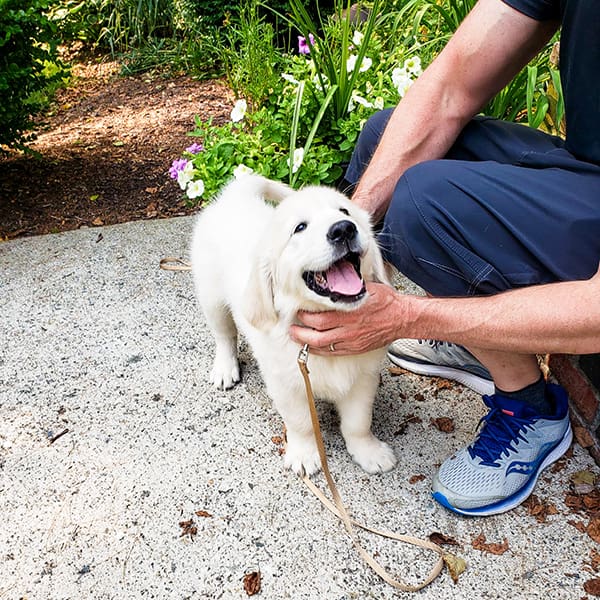
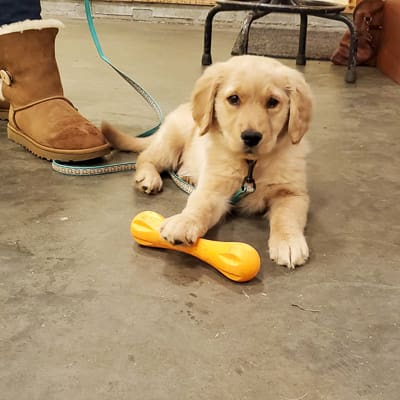
Unless you’re committing to two puppies at the same time (not trainer-recommended) wait to get a second dog after your first is at least 2.5 years old and fully trained. The upper limit of the recommended age is a maximum of 6 years old. You want your first dog to be spunky enough to enjoy it and ideally make it easier on you. During this age range, the two dogs will have similar physical capabilities, so you can walk them together and play together. 

[/et_pb_text][/et_pb_column][et_pb_column type=”1_4″ _builder_version=”4.16″ global_colors_info=”{}”][et_pb_image src=”https://coachyourdog.com/wp-content/uploads/2024/12/younger-and-older-golden-retreievers-during-dog-training.jpg” alt=”jack russell terrier biting leash” title_text=”younger and older golden retreievers during dog training” _builder_version=”4.27.4″ global_colors_info=”{}”][/et_pb_image][/et_pb_column][/et_pb_row][et_pb_row column_structure=”3_5,2_5″ _builder_version=”4.16″ custom_margin=”0px||||false|false” custom_margin_tablet=”0px||||false|false” custom_margin_phone=”0px||||false|false” custom_margin_last_edited=”on|desktop” global_colors_info=”{}”][et_pb_column type=”3_5″ _builder_version=”4.16″ global_colors_info=”{}”][et_pb_text _builder_version=”4.27.4″ custom_margin=”0px||||false|false” global_colors_info=”{}”]

Does Gender Matter When Adopting a Second Dog?

Yes and no. The safest rule of thumb is to get the opposite sex of the dog when getting a second dog. There are situations where getting a second dog of the same sex is fine. If your female first dog is strong-minded, opt for a male second dog. If your male first dog is pushy and territorial, opt for a female second dog. We have seen plenty of great same-sex dog pairings, but one of them is the natural leader and the other one enjoys being second in command. 

[/et_pb_text][et_pb_text _builder_version=”4.27.4″ _module_preset=”default” global_colors_info=”{}”]

If you’re unsure if a male or female dog would be the best addition to your household, ask your breeder or the shelter for their input. Often they will be able to assess the puppy and its early personality to best place them with the best household. A good breeder and shelter will also discuss this with you, even setting up a meet and greet with your current dog. 

[/et_pb_text][et_pb_text _builder_version=”4.27.4″ _module_preset=”default” custom_padding=”|||80px|false|false” custom_padding_tablet=”|||80px|false|false” custom_padding_phone=”|29px||15px|false|false” custom_padding_last_edited=”on|phone” global_colors_info=”{}”]

Darla was our first Dog Coach mascot and came to the shelter to meet Westley. She was very headstrong and would tolerate another female in the house, as long as they knew she was the queen bee. Westley, a young, overly adrenalized mutt that our clients know and love, was immediately put in his place by Darla. The shelter workers were impressed and approved of the match. This was an ideal scenario that not all shelters offer but look for a shelter to help confirm a great match. — Darla & Westley pictured 
[/et_pb_text][/et_pb_column][et_pb_column type=”2_5″ _builder_version=”4.16″ global_colors_info=”{}”][et_pb_image src=”https://coachyourdog.com/wp-content/uploads/2022/09/dogs-on-wall.jpg” alt=”Two dogs standing on a stone wall” title_text=”dogs-on-wall” _builder_version=”4.27.4″ global_colors_info=”{}”][/et_pb_image][/et_pb_column][/et_pb_row][et_pb_row column_structure=”3_4,1_4″ _builder_version=”4.27.4″ _module_preset=”default” global_colors_info=”{}”][et_pb_column type=”3_4″ _builder_version=”4.27.4″ _module_preset=”default” global_colors_info=”{}”][et_pb_text _builder_version=”4.27.4″ _module_preset=”default” hover_enabled=”0″ global_colors_info=”{}” sticky_enabled=”0″]

Beyond 2 Dogs: Having 3 Dogs

If you already have two dogs and are wondering, ‘Should I get a third dog?’ the questions are the same. Think about why you want another dog. It’s okay to ‘just want another dog,’ but take the time to think through all the scenarios. It’s not just three times the costs, but any poor behavior from the first two dogs can escalate much quicker. 3 dog pack dynamics are different from two-dog pack dynamics.

Take the time to build relationships with your current dogs and get good at reading their behavior together: when do they get snippy, when does one get pushy with the other, and how are they when you give one more affection over the other? If there is an issue now with two, a third dog is going to complicate the dynamic more.

Download our free PDF to understand our recommended steps

[/et_pb_text][/et_pb_column][et_pb_column type=”1_4″ _builder_version=”4.27.4″ _module_preset=”default” global_colors_info=”{}”][et_pb_image src=”https://coachyourdog.com/wp-content/uploads/2024/12/three-terrier-multi-dog-training.jpg” alt=”two dog owners with three leashed dogs” title_text=”three-terrier-multi-dog-training” _builder_version=”4.27.4″ global_colors_info=”{}”][/et_pb_image][/et_pb_column][/et_pb_row][et_pb_row column_structure=”3_4,1_4″ _builder_version=”4.16″ custom_margin=”0px||||false|false” custom_margin_tablet=”0px||||false|false” custom_margin_phone=”0px||||false|false” custom_margin_last_edited=”on|desktop” global_colors_info=”{}”][et_pb_column type=”3_4″ _builder_version=”4.16″ global_colors_info=”{}”][et_pb_text _builder_version=”4.27.4″ custom_margin=”0px||||false|false” global_colors_info=”{}”]

Should I Get Another Dog for my Senior Dog?

Getting a second dog when your dog is still active is the best approach. Having a puppy can be exhausting for an older dog with creaky joints or less stamina. It’s best to plan ahead and introduce a puppy before your first dog is 6-7 years old. It’s also important to keep in mind your older dog’s physical and mental health before introducing a new dog. Even if the second dog isn’t a puppy, a younger dog will most likely be more energetic and agile than your older dog, making the same points relevant. 

[/et_pb_text][et_pb_text _builder_version=”4.27.4″ _module_preset=”default” global_colors_info=”{}”]

While some older dogs are “kept young” by a puppy’s energy, other dogs may find the adjustment overwhelming or stressful. Be sure to advocate for both dogs by ensuring your older dog has opportunities for rest and to be alone away from the puppy’s antics. Similarly, teach your puppy boundaries and how to leave the older dog alone.

When thinking about getting another dog for your senior dog, think about your older dog’s temperament and behavior. Is your dog friendly and tolerant of younger, energetic dogs while out on walks? Or does your dog prefer a calm, quiet environment, meandering alone? These observations can help you determine whether adding a puppy will enhance your dog’s life or create unneeded stress.

If and when you do introduce a younger dog into your household, monitor interactions carefully during the initial introduction and first weeks. Watch both dogs for growling, resource guarding, and changes in behavior. Crate training for the new dog and re-introducing a dog crate for your older dog is a standard recommendation to provide appropriate downtime for both pets.

Read about how to advocate for your older dog.

[/et_pb_text][/et_pb_column][et_pb_column type=”1_4″ _builder_version=”4.16″ global_colors_info=”{}”][et_pb_image src=”https://coachyourdog.com/wp-content/uploads/2024/12/Darla-senior-dog-remote-collar-trained.jpg” alt=”anxious dog following owner to bathroom” title_text=”Darla-senior-dog-remote-collar-trained” _builder_version=”4.27.4″ global_colors_info=”{}”][/et_pb_image][et_pb_image src=”https://coachyourdog.com/wp-content/uploads/2024/12/two-terriers-with-cat-during-dog-training.jpg” alt=”anxious dog following owner to bathroom” title_text=”two terriers with cat during dog training” _builder_version=”4.27.4″ global_colors_info=”{}”][/et_pb_image][/et_pb_column][/et_pb_row][et_pb_row column_structure=”3_4,1_4″ _builder_version=”4.16″ custom_margin=”0px||||false|false” custom_margin_tablet=”0px||||false|false” custom_margin_phone=”0px||||false|false” custom_margin_last_edited=”on|desktop” global_colors_info=”{}”][et_pb_column type=”3_4″ _builder_version=”4.16″ global_colors_info=”{}”][et_pb_text _builder_version=”4.27.4″ custom_margin=”0px||||false|false” global_colors_info=”{}”]

Will Getting Another Dog Help My Nervous Dog?

Getting another dog to help separation anxiety or nervousness is not recommended. It boils down to not solving the root of the issue. Putting in the time and effort to train your nervous dog, build confidence, and set boundaries is the answer to curing separation anxiety and general nervousness. Nervous/ anxious behaviors in dogs don’t just disappear. Hiring a trainer to address it before it gets worse is the best course of action. Nervousness and insecurity are often a precursor to reactive or even aggressive behavior and a second dog could turn your first dog into a big hot mess. The best course of action is to train your nervous dog to be a leader before introducing another dog.

[/et_pb_text][et_pb_text _builder_version=”4.27.4″ custom_margin=”0px||||false|false” hover_enabled=”0″ global_colors_info=”{}” sticky_enabled=”0″]

Getting a second dog is a big decision with many factors to consider. Some households regret getting second dog. But doing your due diligence to ensure your current dog is fully trained and your intention is fully aligned can guide you in making the right choice for your household.

Start with our free download: 6 things to do before getting a second dog. 

[/et_pb_text][/et_pb_column][et_pb_column type=”1_4″ _builder_version=”4.16″ global_colors_info=”{}”][et_pb_image src=”https://coachyourdog.com/wp-content/uploads/2024/12/rottie-and-terrier-during-dog-training-outside.jpg” alt=”anxious dog following owner to bathroom” title_text=”rottie and terrier during dog training outside” _builder_version=”4.27.4″ global_colors_info=”{}”][/et_pb_image][et_pb_image src=”https://coachyourdog.com/wp-content/uploads/2024/12/6-key-steps-2nd-dog.png” title_text=”6-key-steps-2nd-dog” url=”https://coachyourdog.com/free-downloads/#second-dog” _builder_version=”4.27.4″ _module_preset=”default” hover_enabled=”0″ global_module=”233157″ global_colors_info=”{}” sticky_enabled=”0″][/et_pb_image][/et_pb_column][/et_pb_row][/et_pb_section][et_pb_section fb_built=”1″ _builder_version=”4.24.2″ _dynamic_attributes=”link_option_url” _module_preset=”default” background_color=”gcid-066de704-5a97-481e-9907-be1ddea52541″ link_option_url=”@ET-DC@eyJkeW5hbWljIjp0cnVlLCJjb250ZW50IjoicG9zdF9saW5rX3VybF9wYWdlIiwic2V0dGluZ3MiOnsicG9zdF9pZCI6IjIzMjg0MCJ9fQ==@” global_module=”233133″ global_colors_info=”{%22gcid-066de704-5a97-481e-9907-be1ddea52541%22:%91%22background_color%22%93}”][et_pb_row _builder_version=”4.24.2″ _module_preset=”default” global_colors_info=”{}”][et_pb_column type=”4_4″ _builder_version=”4.24.2″ _module_preset=”default” global_colors_info=”{}”][et_pb_text _builder_version=”4.27.4″ _module_preset=”default” background_layout=”dark” hover_enabled=”0″ global_colors_info=”{}” sticky_enabled=”0″]

Virtual Dog Coach – On-Demand Video Training Coming 2025!

Sign up to get early access & learn more

[/et_pb_text][/et_pb_column][/et_pb_row][/et_pb_section][et_pb_section fb_built=”1″ _builder_version=”4.24.2″ custom_margin=”50px||||false|false” custom_margin_tablet=”50px||||false|false” custom_margin_phone=”50px||||false|false” custom_margin_last_edited=”on|desktop” custom_padding=”||||false|false” global_module=”10576″ saved_tabs=”all” global_colors_info=”{}”][et_pb_row _builder_version=”4.16″ global_colors_info=”{}”][et_pb_column type=”4_4″ _builder_version=”4.16″ global_colors_info=”{}”][et_pb_divider _builder_version=”4.24.2″ _module_preset=”default” global_colors_info=”{}”][/et_pb_divider][et_pb_text _builder_version=”4.24.2″ vertical_offset_tablet=”0″ horizontal_offset_tablet=”0″ z_index_tablet=”0″ text_text_shadow_horizontal_length_tablet=”0px” text_text_shadow_vertical_length_tablet=”0px” text_text_shadow_blur_strength_tablet=”1px” link_text_shadow_horizontal_length_tablet=”0px” link_text_shadow_vertical_length_tablet=”0px” link_text_shadow_blur_strength_tablet=”1px” ul_text_shadow_horizontal_length_tablet=”0px” ul_text_shadow_vertical_length_tablet=”0px” ul_text_shadow_blur_strength_tablet=”1px” ol_text_shadow_horizontal_length_tablet=”0px” ol_text_shadow_vertical_length_tablet=”0px” ol_text_shadow_blur_strength_tablet=”1px” quote_text_shadow_horizontal_length_tablet=”0px” quote_text_shadow_vertical_length_tablet=”0px” quote_text_shadow_blur_strength_tablet=”1px” header_text_shadow_horizontal_length_tablet=”0px” header_text_shadow_vertical_length_tablet=”0px” header_text_shadow_blur_strength_tablet=”1px” header_2_text_shadow_horizontal_length_tablet=”0px” header_2_text_shadow_vertical_length_tablet=”0px” header_2_text_shadow_blur_strength_tablet=”1px” header_3_text_shadow_horizontal_length_tablet=”0px” header_3_text_shadow_vertical_length_tablet=”0px” header_3_text_shadow_blur_strength_tablet=”1px” header_4_text_shadow_horizontal_length_tablet=”0px” header_4_text_shadow_vertical_length_tablet=”0px” header_4_text_shadow_blur_strength_tablet=”1px” header_5_text_shadow_horizontal_length_tablet=”0px” header_5_text_shadow_vertical_length_tablet=”0px” header_5_text_shadow_blur_strength_tablet=”1px” header_6_text_shadow_horizontal_length_tablet=”0px” header_6_text_shadow_vertical_length_tablet=”0px” header_6_text_shadow_blur_strength_tablet=”1px” box_shadow_horizontal_tablet=”0px” box_shadow_vertical_tablet=”0px” box_shadow_blur_tablet=”40px” box_shadow_spread_tablet=”0px” locked=”off” global_colors_info=”{}”]

Our In-Person Programs – North of Boston, MA

[/et_pb_text][/et_pb_column][/et_pb_row][et_pb_row column_structure=”1_3,1_3,1_3″ make_equal=”on” disabled_on=”off|off|off” _builder_version=”4.16″ vertical_offset_tablet=”0″ horizontal_offset_tablet=”0″ width=”75%” width_tablet=”100%” width_phone=”” width_last_edited=”on|desktop” module_alignment=”center” z_index_tablet=”0″ box_shadow_vertical_tablet=”0px” box_shadow_blur_tablet=”40px” locked=”off” global_colors_info=”{}”][et_pb_column type=”1_3″ _builder_version=”4.16″ custom_padding=”|||” global_colors_info=”{}” custom_padding__hover=”|||”][et_pb_image src=”https://coachyourdog.com/wp-content/uploads/2023/01/Puppies-3.jpg” align=”center” _builder_version=”4.16″ global_colors_info=”{}”][/et_pb_image][et_pb_text _builder_version=”4.16″ global_colors_info=”{}”]

Team Puppy Training

Encourages your leadership and show how you to nurture good behavior. 

[/et_pb_text][et_pb_button button_url=”@ET-DC@eyJkeW5hbWljIjp0cnVlLCJjb250ZW50IjoicG9zdF9saW5rX3VybF9wYWdlIiwic2V0dGluZ3MiOnsicG9zdF9pZCI6Ijk0NTYifX0=@” button_text=”Learn More” button_alignment=”center” _builder_version=”4.16″ _dynamic_attributes=”button_url” global_colors_info=”{}”][/et_pb_button][/et_pb_column][et_pb_column type=”1_3″ _builder_version=”4.16″ custom_padding=”|||” global_colors_info=”{}” custom_padding__hover=”|||”][et_pb_image src=”https://coachyourdog.com/wp-content/uploads/2023/01/20210504-20210504_133535.jpg” align=”center” _builder_version=”4.16″ global_colors_info=”{}”][/et_pb_image][et_pb_text _builder_version=”4.24.0″ min_height=”155px” global_colors_info=”{}”]

Foundation Training

Covers the basics of good dog behavior as well as some behavior modification.

[/et_pb_text][et_pb_button button_url=”@ET-DC@eyJkeW5hbWljIjp0cnVlLCJjb250ZW50IjoicG9zdF9saW5rX3VybF9wYWdlIiwic2V0dGluZ3MiOnsicG9zdF9pZCI6Ijk0NTMifX0=@” button_text=”Learn More” button_alignment=”center” _builder_version=”4.16″ _dynamic_attributes=”button_url” global_colors_info=”{}”][/et_pb_button][/et_pb_column][et_pb_column type=”1_3″ _builder_version=”4.16″ custom_padding=”|||” global_colors_info=”{}” custom_padding__hover=”|||”][et_pb_image src=”https://coachyourdog.com/wp-content/uploads/2023/01/20221011-20221011_132639.jpg” align=”center” _builder_version=”4.16″ global_colors_info=”{}”][/et_pb_image][et_pb_text _builder_version=”4.16″ global_colors_info=”{}”]

Remote Collar Training

Foundation Training with e-collar for total off-leash freedom and behavior modification.

[/et_pb_text][et_pb_button button_text=”Learn More” button_alignment=”center” _builder_version=”4.16″ global_colors_info=”{}”][/et_pb_button][/et_pb_column][/et_pb_row][et_pb_row _builder_version=”4.24.2″ _module_preset=”default” background_color=”gcid-e08d1c9e-b7ed-4839-9635-8715b8d869b4″ width=”75%” width_tablet=”100%” width_phone=”100%” width_last_edited=”on|desktop” custom_margin_tablet=”” custom_margin_phone=”25px||||false|false” custom_margin_last_edited=”on|phone” global_module=”232978″ saved_tabs=”all” locked=”off” global_colors_info=”{%22gcid-e08d1c9e-b7ed-4839-9635-8715b8d869b4%22:%91%22background_color%22%93}”][et_pb_column type=”4_4″ _builder_version=”4.21.0″ _module_preset=”default” global_colors_info=”{}”][et_pb_text _builder_version=”4.24.2″ _module_preset=”default” background_layout=”dark” module_alignment=”center” custom_margin=”10px||0px||false|false” custom_padding=”|10px||10px|false|true” custom_padding_tablet=”|10px||10px|false|true” custom_padding_phone=”15px||0px||false|true” custom_padding_last_edited=”on|phone” global_colors_info=”{}”]

Interested in online training? Be the first to know!

[/et_pb_text][et_pb_code _builder_version=”4.24.2″ _module_preset=”default” custom_padding=”25px|25px|25px|25px|true|true” global_colors_info=”{}”]

"*" indicates required fields

This field is for validation purposes and should be left unchanged.
Name*
Privacy & Terms*

[/et_pb_code][et_pb_divider color=”#FFFFFF” _builder_version=”4.24.2″ _module_preset=”default” custom_padding=”|10px||10px|false|true” global_colors_info=”{}”][/et_pb_divider][/et_pb_column][/et_pb_row][et_pb_row _builder_version=”4.16″ global_colors_info=”{}”][et_pb_column type=”4_4″ _builder_version=”4.16″ global_colors_info=”{}”][et_pb_text _builder_version=”4.24.2″ custom_padding=”10px||||false|false” global_colors_info=”{}”]

What our clients have to say…

[/et_pb_text][/et_pb_column][/et_pb_row][et_pb_row column_structure=”1_3,1_3,1_3″ _builder_version=”4.16″ background_size=”initial” background_position=”top_left” background_repeat=”repeat” locked=”off” global_colors_info=”{}”][et_pb_column type=”1_3″ _builder_version=”4.16″ custom_padding=”|||” global_colors_info=”{}” custom_padding__hover=”|||”][et_pb_testimonial author=”Margaret B.” portrait_url=”https://coachyourdog.com/wp-content/uploads/2022/11/BELLA-Belmonte-scaled-e1668604597560.jpg” _builder_version=”4.16″ vertical_offset_tablet=”0″ horizontal_offset_tablet=”0″ z_index_tablet=”0″ author_text_shadow_horizontal_length_tablet=”0px” author_text_shadow_vertical_length_tablet=”0px” author_text_shadow_blur_strength_tablet=”1px” position_text_shadow_horizontal_length_tablet=”0px” position_text_shadow_vertical_length_tablet=”0px” position_text_shadow_blur_strength_tablet=”1px” company_text_shadow_horizontal_length_tablet=”0px” company_text_shadow_vertical_length_tablet=”0px” company_text_shadow_blur_strength_tablet=”1px” body_link_text_shadow_horizontal_length_tablet=”0px” body_link_text_shadow_vertical_length_tablet=”0px” body_link_text_shadow_blur_strength_tablet=”1px” body_ul_text_shadow_horizontal_length_tablet=”0px” body_ul_text_shadow_vertical_length_tablet=”0px” body_ul_text_shadow_blur_strength_tablet=”1px” body_ol_text_shadow_horizontal_length_tablet=”0px” body_ol_text_shadow_vertical_length_tablet=”0px” body_ol_text_shadow_blur_strength_tablet=”1px” body_quote_text_shadow_horizontal_length_tablet=”0px” body_quote_text_shadow_vertical_length_tablet=”0px” body_quote_text_shadow_blur_strength_tablet=”1px” box_shadow_horizontal_tablet=”0px” box_shadow_vertical_tablet=”0px” box_shadow_blur_tablet=”40px” box_shadow_spread_tablet=”0px” box_shadow_horizontal_image_tablet=”0px” box_shadow_vertical_image_tablet=”0px” box_shadow_blur_image_tablet=”40px” box_shadow_spread_image_tablet=”0px” text_shadow_horizontal_length_tablet=”0px” text_shadow_vertical_length_tablet=”0px” text_shadow_blur_strength_tablet=”1px” global_colors_info=”{}”]

Dog Coach listened carefully and observed keenly my interaction and tone of voice with Bella. At nearly 6 months now, she is the best-trained dog I’ve had. It was a worthwhile experience!

[/et_pb_testimonial][/et_pb_column][et_pb_column type=”1_3″ _builder_version=”4.16″ custom_padding=”|||” global_colors_info=”{}” custom_padding__hover=”|||”][et_pb_testimonial author=”David S.” portrait_url=”https://coachyourdog.com/wp-content/uploads/2022/11/JASPER-MOSES-Simmons.jpg” _builder_version=”4.16″ vertical_offset_tablet=”0″ horizontal_offset_tablet=”0″ z_index_tablet=”0″ author_text_shadow_horizontal_length_tablet=”0px” author_text_shadow_vertical_length_tablet=”0px” author_text_shadow_blur_strength_tablet=”1px” position_text_shadow_horizontal_length_tablet=”0px” position_text_shadow_vertical_length_tablet=”0px” position_text_shadow_blur_strength_tablet=”1px” company_text_shadow_horizontal_length_tablet=”0px” company_text_shadow_vertical_length_tablet=”0px” company_text_shadow_blur_strength_tablet=”1px” body_link_text_shadow_horizontal_length_tablet=”0px” body_link_text_shadow_vertical_length_tablet=”0px” body_link_text_shadow_blur_strength_tablet=”1px” body_ul_text_shadow_horizontal_length_tablet=”0px” body_ul_text_shadow_vertical_length_tablet=”0px” body_ul_text_shadow_blur_strength_tablet=”1px” body_ol_text_shadow_horizontal_length_tablet=”0px” body_ol_text_shadow_vertical_length_tablet=”0px” body_ol_text_shadow_blur_strength_tablet=”1px” body_quote_text_shadow_horizontal_length_tablet=”0px” body_quote_text_shadow_vertical_length_tablet=”0px” body_quote_text_shadow_blur_strength_tablet=”1px” box_shadow_horizontal_tablet=”0px” box_shadow_vertical_tablet=”0px” box_shadow_blur_tablet=”40px” box_shadow_spread_tablet=”0px” box_shadow_horizontal_image_tablet=”0px” box_shadow_vertical_image_tablet=”0px” box_shadow_blur_image_tablet=”40px” box_shadow_spread_image_tablet=”0px” text_shadow_horizontal_length_tablet=”0px” text_shadow_vertical_length_tablet=”0px” text_shadow_blur_strength_tablet=”1px” global_colors_info=”{}”]

We want to thank Dog Coach for your patience and encouragement! Our dogs are really coming into their own as the perfect family dogs we were looking for!

[/et_pb_testimonial][/et_pb_column][et_pb_column type=”1_3″ _builder_version=”4.16″ custom_padding=”|||” global_colors_info=”{}” custom_padding__hover=”|||”][et_pb_testimonial author=”Sylvie K.” portrait_url=”https://coachyourdog.com/wp-content/uploads/2024/03/BANDIT-Kasnet3-scaled.jpg” _builder_version=”4.24.2″ vertical_offset_tablet=”0″ horizontal_offset_tablet=”0″ z_index_tablet=”0″ author_text_shadow_horizontal_length_tablet=”0px” author_text_shadow_vertical_length_tablet=”0px” author_text_shadow_blur_strength_tablet=”1px” position_text_shadow_horizontal_length_tablet=”0px” position_text_shadow_vertical_length_tablet=”0px” position_text_shadow_blur_strength_tablet=”1px” company_text_shadow_horizontal_length_tablet=”0px” company_text_shadow_vertical_length_tablet=”0px” company_text_shadow_blur_strength_tablet=”1px” body_link_text_shadow_horizontal_length_tablet=”0px” body_link_text_shadow_vertical_length_tablet=”0px” body_link_text_shadow_blur_strength_tablet=”1px” body_ul_text_shadow_horizontal_length_tablet=”0px” body_ul_text_shadow_vertical_length_tablet=”0px” body_ul_text_shadow_blur_strength_tablet=”1px” body_ol_text_shadow_horizontal_length_tablet=”0px” body_ol_text_shadow_vertical_length_tablet=”0px” body_ol_text_shadow_blur_strength_tablet=”1px” body_quote_text_shadow_horizontal_length_tablet=”0px” body_quote_text_shadow_vertical_length_tablet=”0px” body_quote_text_shadow_blur_strength_tablet=”1px” box_shadow_horizontal_tablet=”0px” box_shadow_vertical_tablet=”0px” box_shadow_blur_tablet=”40px” box_shadow_spread_tablet=”0px” box_shadow_horizontal_image_tablet=”0px” box_shadow_vertical_image_tablet=”0px” box_shadow_blur_image_tablet=”40px” box_shadow_spread_image_tablet=”0px” text_shadow_horizontal_length_tablet=”0px” text_shadow_vertical_length_tablet=”0px” text_shadow_blur_strength_tablet=”1px” global_colors_info=”{}”]

Such a great investment! We got a puppy and had a toddler… It was overwhelming at first. Working with Dog Coach has been the gift that keeps on giving.

[/et_pb_testimonial][/et_pb_column][/et_pb_row][et_pb_row _builder_version=”4.16″ global_colors_info=”{}”][et_pb_column type=”4_4″ _builder_version=”4.16″ global_colors_info=”{}”][et_pb_text _builder_version=”4.24.2″ _dynamic_attributes=”link_option_url” link_option_url=”@ET-DC@eyJkeW5hbWljIjp0cnVlLCJjb250ZW50IjoicG9zdF9saW5rX3VybF9wYWdlIiwic2V0dGluZ3MiOnsicG9zdF9pZCI6IjIzMjY5NiJ9fQ==@” global_colors_info=”{}”]

…read more testimonials

[/et_pb_text][et_pb_post_nav prev_text=”Previous Article: %title” next_text=”Next Article: %title” _builder_version=”4.24.2″ custom_margin_tablet=”” custom_margin_phone=”” custom_margin_last_edited=”on|phone” custom_padding=”||20px||false|false” global_colors_info=”{}”][/et_pb_post_nav][/et_pb_column][/et_pb_row][/et_pb_section]

Similar Posts

  • Your Dog is Willing to Learn. Are You Ready to Teach?

    Your Dog Isn’t the Problem. The Pattern Is. Many dog owners feel stuck. You’ve tried to do the right things. You’ve watched videos, read advice, maybe even done training before. But your dog is still pulling on walks, barking at everything, or ignoring you when it matters most. It starts to feel like your dog…

  • |

    Housebreaking Your Dog

    What Housebreaking Really Is Housebreaking can feel frustrating. You take your dog outside, nothing happens. Then they come inside and go on the floor. It starts to feel confusing or even intentional. Housebreaking isn’t a behavior problem. It’s a timing and management problem. Your dog hasn’t yet learned: Until those pieces are clear, accidents will…

  • Best Puppy Tips

    [et_pb_section fb_built=”1″ _builder_version=”4.16″ global_colors_info=”{}”][et_pb_row column_structure=”3_4,1_4″ _builder_version=”4.16″ background_size=”initial” background_position=”top_left” background_repeat=”repeat” global_colors_info=”{}”][et_pb_column type=”3_4″ _builder_version=”4.16″ custom_padding=”|||” global_colors_info=”{}” custom_padding__hover=”|||”][et_pb_text _builder_version=”4.27.5″ vertical_offset_tablet=”0″ horizontal_offset_tablet=”0″ hover_enabled=”0″ z_index_tablet=”0″ text_text_shadow_horizontal_length_tablet=”0px” text_text_shadow_vertical_length_tablet=”0px” text_text_shadow_blur_strength_tablet=”1px” link_text_shadow_horizontal_length_tablet=”0px” link_text_shadow_vertical_length_tablet=”0px” link_text_shadow_blur_strength_tablet=”1px” ul_text_shadow_horizontal_length_tablet=”0px” ul_text_shadow_vertical_length_tablet=”0px” ul_text_shadow_blur_strength_tablet=”1px” ol_text_shadow_horizontal_length_tablet=”0px” ol_text_shadow_vertical_length_tablet=”0px” ol_text_shadow_blur_strength_tablet=”1px” quote_text_shadow_horizontal_length_tablet=”0px” quote_text_shadow_vertical_length_tablet=”0px” quote_text_shadow_blur_strength_tablet=”1px” header_text_shadow_horizontal_length_tablet=”0px” header_text_shadow_vertical_length_tablet=”0px” header_text_shadow_blur_strength_tablet=”1px” header_2_text_shadow_horizontal_length_tablet=”0px” header_2_text_shadow_vertical_length_tablet=”0px” header_2_text_shadow_blur_strength_tablet=”1px” header_3_text_shadow_horizontal_length_tablet=”0px” header_3_text_shadow_vertical_length_tablet=”0px” header_3_text_shadow_blur_strength_tablet=”1px” header_4_text_shadow_horizontal_length_tablet=”0px” header_4_text_shadow_vertical_length_tablet=”0px” header_4_text_shadow_blur_strength_tablet=”1px” header_5_text_shadow_horizontal_length_tablet=”0px” header_5_text_shadow_vertical_length_tablet=”0px” header_5_text_shadow_blur_strength_tablet=”1px” header_6_text_shadow_horizontal_length_tablet=”0px” header_6_text_shadow_vertical_length_tablet=”0px” header_6_text_shadow_blur_strength_tablet=”1px” box_shadow_horizontal_tablet=”0px” box_shadow_vertical_tablet=”0px”…

  • | |

    How to Crate Train a Dog for Calm Behavior (Not Just Containment)

    Full crate training teaches your dog to self-settle in their crate, with the door closed, whenever you place them there for a nap or nighttime sleep. This approach provides the greatest benefits of crate training and contributes to better behavior both inside and outside your home. Why Is Crate Training Important? Beyond the practical benefit…

  • |

    “My Dog Won’t Stop Biting the Leash. How Do I Make It Stop!”

    It’s typical and natural for a puppy or an untrained dog to put the leash in their mouth. It takes patience to work with your dog to make walks and daily life less frustrating, and see them drop their leash. Here are points to remember as you start to convey better on-leash expectations to your…

  • | |

    When and Why To Keep a Leash on Your Dog in the House

    Keeping a leash on your dog while inside your home is an easy and effective way to guide your dog’s behavior. Leashes are traditionally used on walks, outside of the house, but added training value can be found in using them inside. Many people seek out dog training because they are looking for more control…